
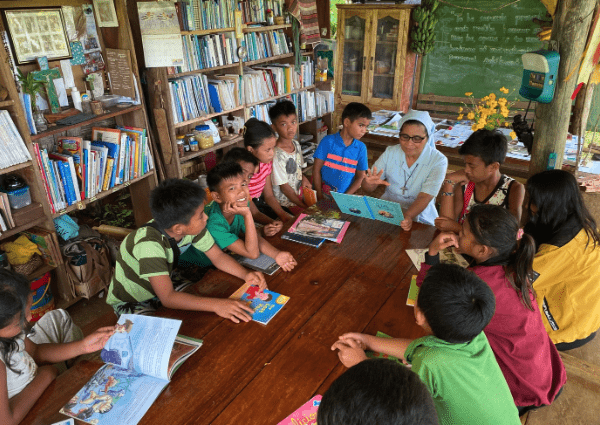
A group of indigenous youth from Upper Pulangi, together with visiting Sisters of the Ancillae Cordis Iesu (ACI), the Handmaids of the Sacred Heart of Jesus, gathered this past weekend at Balay Laudato Si’, a retreat center in Bendum, Bukidnon in the southern Philippines, for a meaningful experience of faith, reflection, and communal prayer.
The event, which took place in a spirit of synodality and shared discernment, sought to address the ecological challenges raised by COP30 and offered a space for participants to reflect on the Church’s guidance in the face of pressing global issues.
The sessions focused on listening to the signs of the times and finding deeply rooted responses to these challenges in line with pastoral guidance from Church leaders.
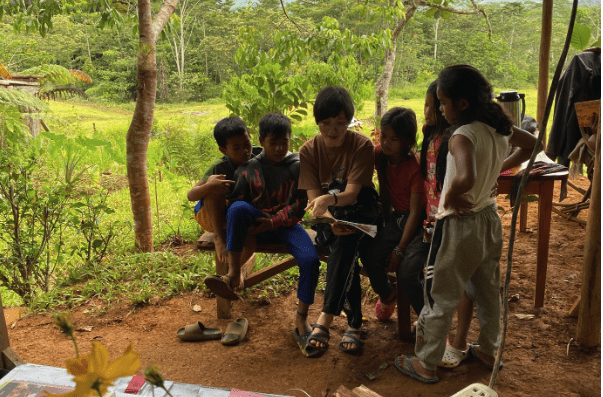
The gathering began with personal sharing and words of welcome, where many of the youth participants, returning scholars, and graduates of the Apu Palamguwan Cultural Education Center (APC), spoke of the significance of returning home—to the land, community, and a place of renewal.
Their reflections highlighted how their formation in Bendum had shaped their identities and values and continues to guide them as they navigate studies, work, and growing responsibilities. The atmosphere was intimate and reflective, characterized by mutual trust and a shared desire to continue walking together in faith.
Pastoral Documents Guide Dialogue
The youth’s reflections were guided by three important Church documents:
- The Pastoral Letter on the Jubilee 2025: A Pilgrimage of Hope by the Catholic Bishops’ Conference of the Philippines (CBCP),
- The FABC Pastoral Letter: A Call to Ecological Conversion, and
- The Global South Churches’ Statement: A Call For Climate Justice and The Common Home: Ecological Conversion, Transformation And Resistance To False Solutions.
As the group reflected on the CBCP’s call for inner renewal and accountability, they found their own life stories mirrored in the bishops’ words:
“As we reflect on these situations, we realize that the first thing we need to do is to examine ourselves and pursue the path of personal, institutional, and ecclesial conversion in order to rediscover hope. This is the opportunity that the Jubilee Year provides us. Thus, we too make ourselves accountable before the Lord.”
The invitation to conversion resonated deeply with participants, many of whom shared experiences of returning to their communities after years away at school or work. They sought to understand how they could serve more meaningfully and with integrity.
Urgency for Ecological Action
The group also discussed the FABC’s Pastoral Letter on the Care of Creation, which highlighted the urgency of ecological action. A passage that particularly grounded their dialogue was:
“We call on our dioceses to contribute by raising awareness, supporting climate advocacy, and engaging with decision-makers to push for ambitious and equitable climate solutions. Let us ensure that the voices of the most vulnerable are heard and that the call for justice resonates strongly, especially in the context of our shared Christian responsibility to care for the earth and all its inhabitants.”
The youth reflected on how their communities, often among the most affected by climate change, also possess deep knowledge and resilience—resources that the broader Church must listen to and learn from.
Living the Values of “Good Living”
The Global South Churches’ Statement on climate justice also played a significant role in the discussions. The concept of “Good Living” resonated with the indigenous youth, as it reflected their elders’ way of life rooted in balance, respect, and the wellbeing of both people and place. The statement emphasized:
“It is about living a productive and supportive life, in peace and harmony with our brothers and sisters and with ecosystems. Good Living proposes a new form of human society that recognizes and respects its interdependence with the web of life, promoting solidarity, mutual respect and new alternatives for living, free from the logic of accumulation and prejudice.”
For the indigenous youth, this articulation of “Good Living” affirms a way of life their elders have passed down—rooted not in consumerism, but in balance, respect, and the wellbeing of both people and place.
Community Building through Faith and Joy
Alongside the theological and ecological discussions, the weekend was also marked by expressions of community life and joy. The Sisters led a bread-making session with some youth in the dalēpaan, using this as an opportunity for shared labor and hospitality. Younger participants were read stories drawn from scripture and lived experience, and choir practice for Sunday Mass provided another opportunity for spiritual preparation and collaboration.
In addition to study and prayer, there was time for recreation, with activities like table tennis and volleyball fostering connection, laughter, and a sense of kinship. These simple activities contributed to breaking down barriers and creating a sense of unity among the participants.
Mass and BEC Reflection
The spiritual program culminated with a Sunday Mass celebrated by Fr. Pedro Walpole at the community chapel. Following the Mass, Bendum community members joined the youth and Sisters in a Basic Ecclesial Community (BEC) session at Balay Laudato Si’. This session gave participants the space to listen to the Word, to one another, and to the stirrings of the Spirit. Many youth reflected on how their early BEC experiences shaped their understanding of the Church as a community of dialogue and service.
ACI Sisters’ Contributions
The presence of the ACI Sisters added depth to the gathering. Sr. Ellie from Dapitan City shared her admiration for the community’s landscape and the way of life she encountered. She noted the contrast between urban and rural religious life, reflecting on how a house without walls—like that of the lawig—can symbolize a heart that is open, simple, and truly free. Sr. Eunice, a missionary from the Congo now assigned in Quezon City, expressed joy at the youth’s strong sense of identity and encouraged them to continue caring for their community and letting their light shine by passing on what they have received.
A Symbol of Faith and Renewal
As the weekend came to a close, participants gathered around a bonfire beneath the stars, encircled by the forest, offering songs and prayers of thanksgiving. The bonfire became a symbol of kinship, warmth, and the enduring light of faith. It was a quiet but powerful reminder that even small gatherings, rooted in relationship and grounded in the land, can become places of renewal and discernment for the Church.
This gathering in Bendum, held in anticipation of the universal Church’s Jubilee of Hope in 2025 and COP30, stands as a local expression of the Church’s commitment to listening, learning, and accompanying marginalized communities. The witness of the indigenous youth, together with the ACI Sisters, calls the Church to a path of integral ecology, cultural rootedness, and synodal engagement—one that is essential for the Church as a whole.