The social action arm of the Philippine Catholic Church has called on every diocese to institutionalize an Integral Ecology Ministry and align Church finances, investments, and operations with its ecological commitments.
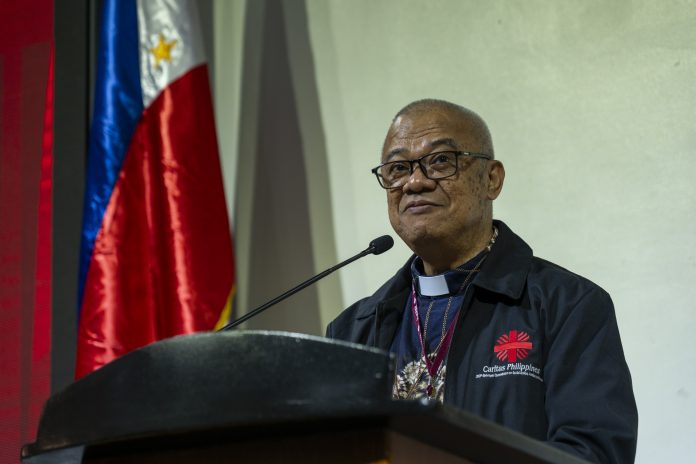
Bishop Gerardo Alminaza of San Carlos, president of Caritas Philippines and interim chairperson of its Integral Ecology Ministry, issued the call in a pastoral letter for the 2026 Season of Creation dated Sept. 8.
“We call upon every diocese to institutionalize and strengthen its Integral Ecology Ministry (IEM),” Alminaza said.
The prelate said each ministry should be “appropriately structured, staffed with competent focal persons, adequately resourced, and integrated into diocesan pastoral planning so that ecological action becomes sustained rather than occasional, systemic rather than fragmented.”
Alminaza said ecological responsibility should not be confined to a single Church office but integrated into “liturgy and worship, catechesis and formation, social action, education, youth ministry, finance and investments, procurement, construction, administration, pastoral planning, and community life.”
“Integral ecology is not simply another ministry of the Church. It is a dimension of the Church’s entire mission,” he said.
The bishop identified five ecological imperatives for dioceses: reclaiming the gift of “living water,” upholding the rights of nature and Indigenous Peoples, advancing a just transition to clean and renewable energy, institutionalizing financial divestment and ethical stewardship, and strengthening Integral Ecology Ministries.
On Church finances, Alminaza reaffirmed a commitment to move Catholic investments and financial resources away from “industries and activities that cause grave ecological destruction, particularly destructive mining, logging, coal, fossil gas, and other forms of fossil-fuel dependence.”
He also called on Catholic institutions to exercise responsible discernment in their relationships with banks and financial institutions and engage them toward “sustainable, transparent, and socially responsible financing.”
The same ecological principles, he said, should guide decisions on donations, corporate social responsibility funds, sponsorships and material gifts.
“We reaffirm our commitment not to allow financial relationships with highly polluting and destructive extractive industries—including environmentally destructive quarrying and unsustainable monoculture agribusiness—to compromise our mission, silence our prophetic witness, or weaken our solidarity with affected communities,” Alminaza said.
He said Catholic institutions should lead by example by embracing cleaner and less destructive energy sources, including solar, wind, appropriate hydro and geothermal power.
Alminaza stressed that the shift to renewable energy must also protect workers and affected communities, provide reliable and affordable energy, reduce energy poverty and prioritize decentralized and community-based systems where appropriate.
“The poor must not bear the cost of the transition; they should become among its principal beneficiaries and participants,” he said.
The bishop also reiterated opposition to destructive large-scale commercial mining and unsustainable logging and called for stronger protection of forests, watersheds, biodiversity and communities.
Alminaza urged dioceses to move beyond counting activities and measure their ecological work through results, including restored watersheds, reduced plastic and waste, renewable energy generated, carbon emissions avoided, investments redirected and Indigenous and frontline communities protected.
“Our credibility will ultimately be seen not only in what we proclaim, but also in how faithfully we live what we proclaim,” he said.