Catholic communicators called on religious sisters to take ownership of their stories and bring firsthand accounts from marginalized communities into mainstream media.
They warned that entertainment-driven and stereotyped coverage often obscures the sisters’ work and public witness.
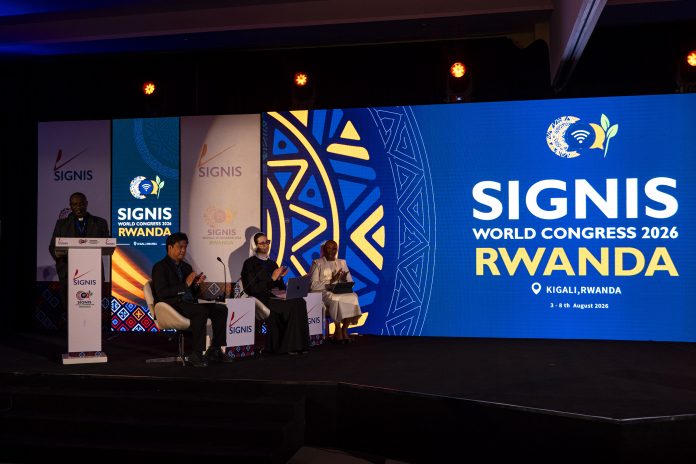
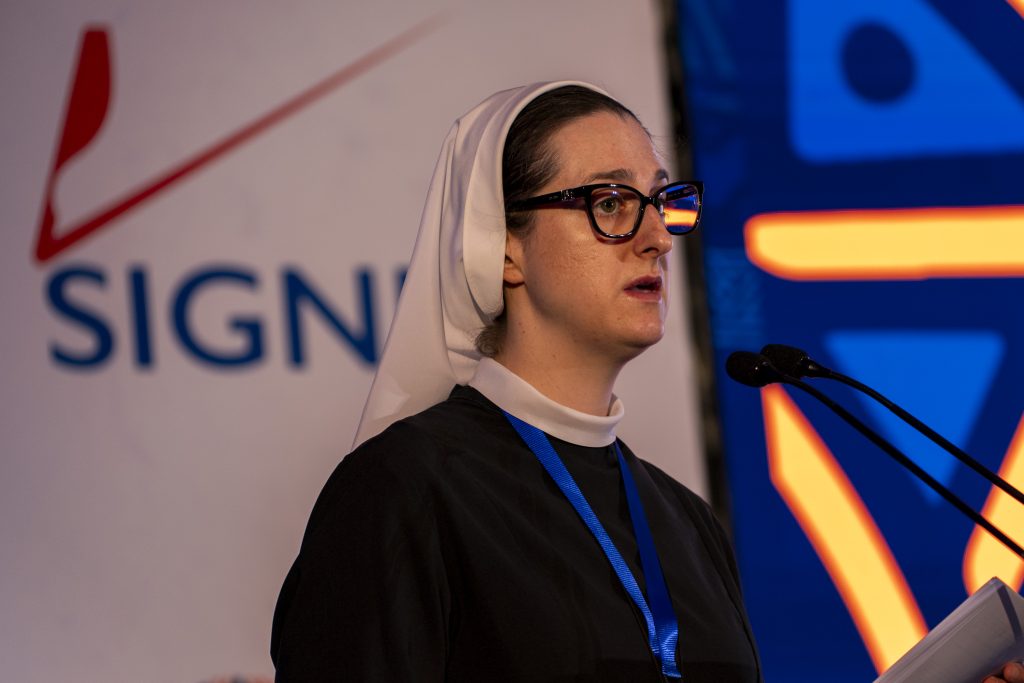
Speaking at the SIGNIS World Congress in Kigali on Aug. 6, Sr. Nina Krapić said media coverage of Catholic sisters frequently focuses on unusual stories, scandals, and conflict while paying little attention to their work around the world.
“What becomes viral in social media gets covered by the mainstream media,” said Krapić, deputy director of the Holy See Press Office at the Dicastery for Communication.
“And only occasionally you can find a story about what sisters really do and the extraordinary work that they do all over the world,” she said.
Krapić said sisters can also reinforce that image when their own social media accounts focus heavily on dances, songs, and games.
“And there’s nothing inherently wrong with playing or singing, but if this becomes the dominant narrative, we have a problem,” she said.
Krapić said sisters work in hospitals, hospices, schools, universities, urban slums, and remote villages. They accompany migrants and refugees, prevent human trafficking, and advocate for human dignity before governments and international institutions.
“The margins are not somewhere far away. They are in the center of the life of every Catholic sister,” she said.
Krapić said sisters’ lives should not be reduced to “communicating dances” or “to a decorative role in the church.”
They cannot keep such accounts “for our own personal memory,” she said, because communicating their lived reality “is not secondary to our mission; it is a central part of our mission.”
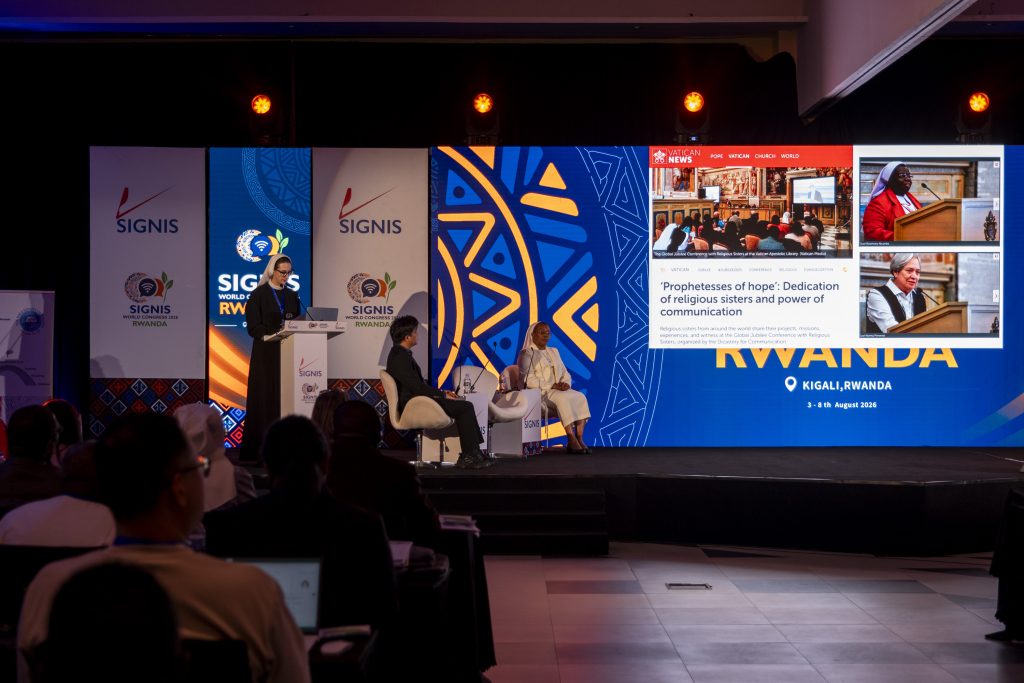
Krapić presented the Pentecost Project, which trains sisters in journalism, social media management, institutional communication, and participatory journalism.
Vatican Media publishes a weekly story written by a Catholic sister and translated into 10 languages. The project also offers online training and three-month internships in Vatican Media newsrooms.
The training encourages sisters not only to report on marginalized communities but to produce stories with them, allowing people to tell their experiences in their own words and influence how they are portrayed.
Krapić said the project has more than 260 alumni. Some participants have also launched communication initiatives in their congregations and dioceses.
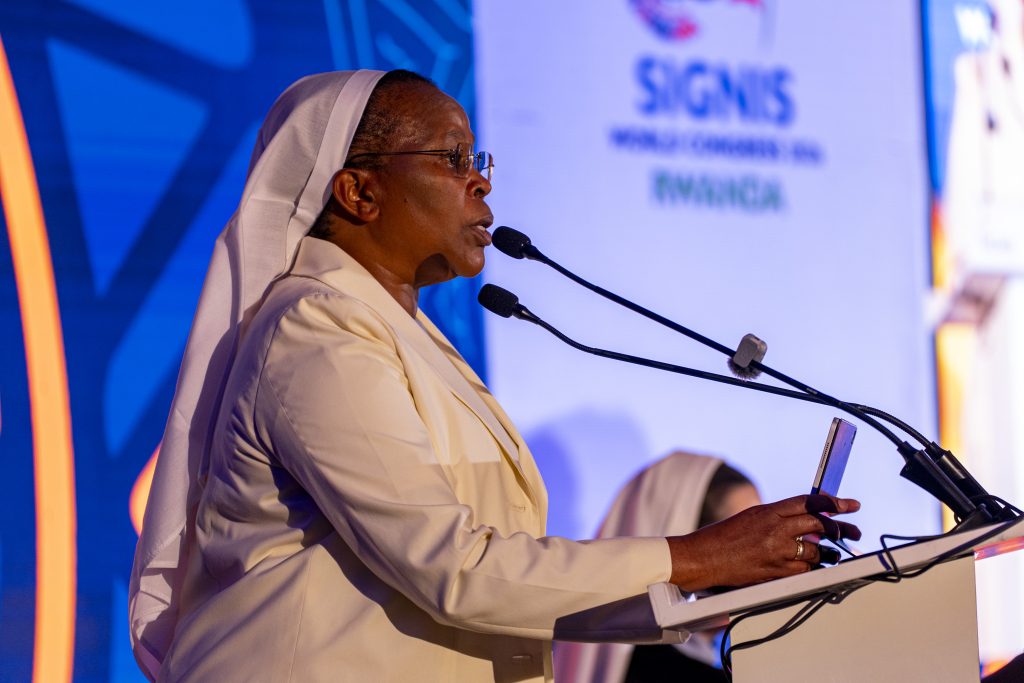
Sr. Jane Wakahiu, associate vice president for program operations and head of Catholic Sisters at the Conrad N. Hilton Foundation, described storytelling and amplifying sisters’ voices in the public square as a “gospel imperative.”
She said sisters remain in communities affected by conflict, hunger, and natural disasters long after media attention has moved elsewhere.
Wakahiu said the humility associated with religious life should not result in the disappearance of sisters’ voices from public discussion.
“This is why I often say that humility should never become invisibility,” she said. “Yet when their stories remain untold, the public square becomes poorer.”
Wakahiu said Catholic communication has a responsibility to expose injustice and give voice to those who suffer while also showing the hope found in accompaniment and service.
She said storytelling “becomes an act of love when it refuses to leave people in that darkness” and “an act of justice when it gives voice to those who are rarely heard.”
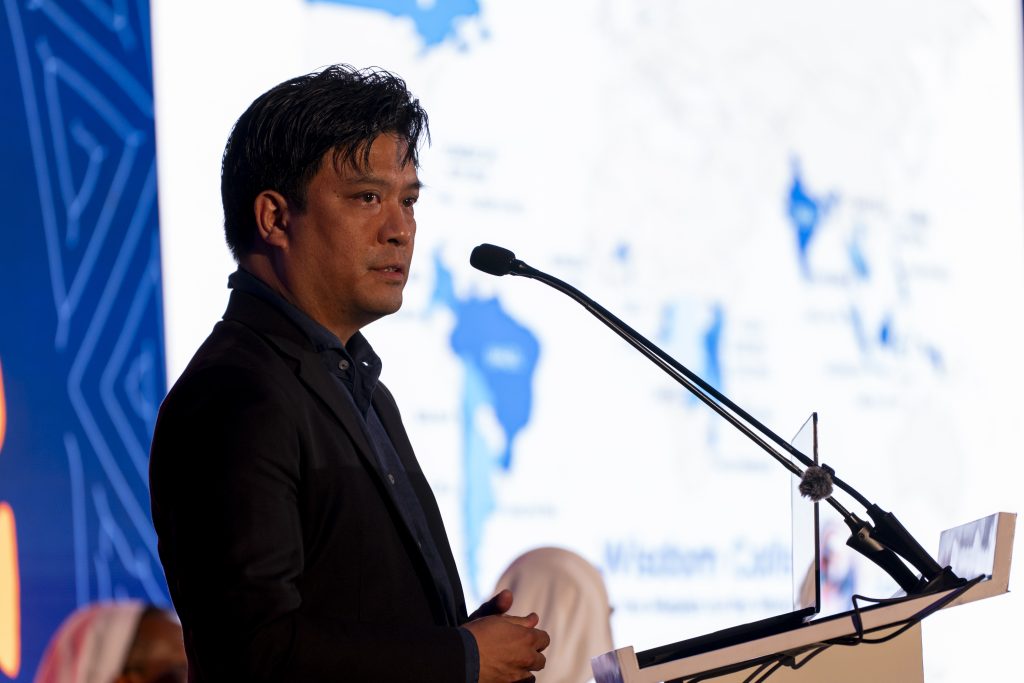
The Conrad N. Hilton Foundation funds the Vatican-led Pentecost Project and the SIGNIS-led Wisdom Calls initiative, which seek to amplify the voices of Catholic sisters.
Dr. Peter Monthienvichienchai, secretary-general of SIGNIS, said his encounters with religious sisters revealed a reality that differed sharply from their portrayal in mainstream media.
“Especially in the West, they are often underrepresented, misrepresented and, in the worst case, malrepresented,” he said.
Monthienvichienchai said Wisdom Calls seeks to bring stories about sisters’ work into secular, local, national, and regional media, reaching audiences beyond Catholic news platforms.
He said the project aims to have their stories featured on morning television and evening news programs “with just as much importance as some billionaire making some statements.”
Pam Aleman, president of SIGNIS North America, said the Latin American edition of Wisdom Calls brought together 11 sisters serving mining communities, isolated villages, and families searching for disappeared relatives.
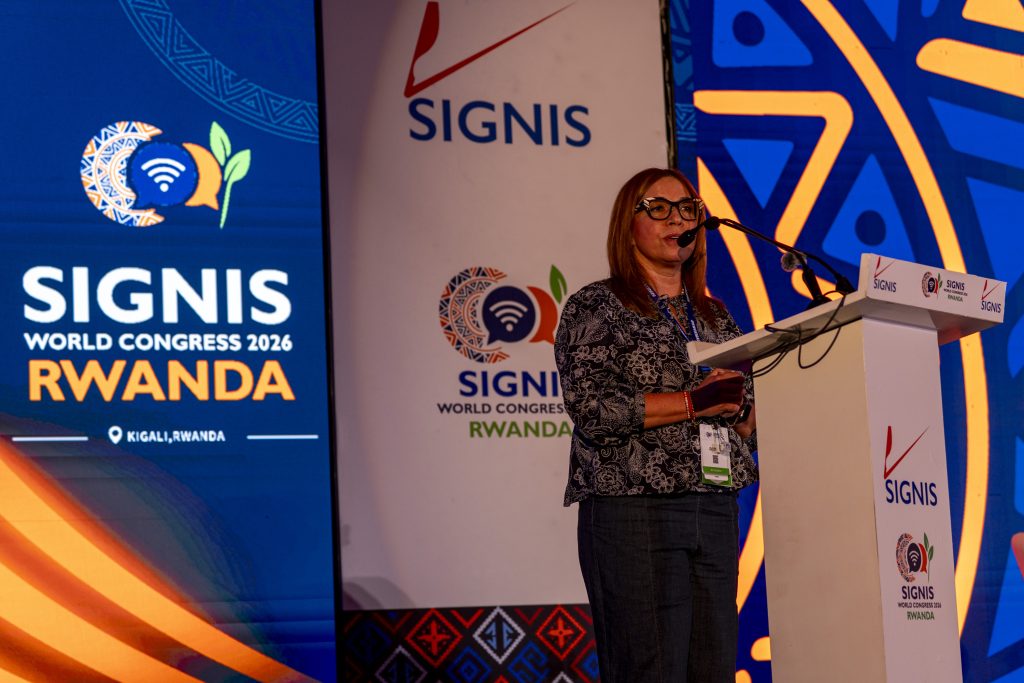
During the three-day program, the sisters wrote, revised, and shared stories drawn from their work.
“We watched them transform and take ownership of their stories and discover the power and the beauty of their own voices,” Aleman said.
She urged Catholic communicators to use their professional networks to help bring the sisters’ accounts to mainstream audiences.
“These are really the stories that we’re talking about today in Wisdom Calls, the real stories, stories that need to be told,” she said.