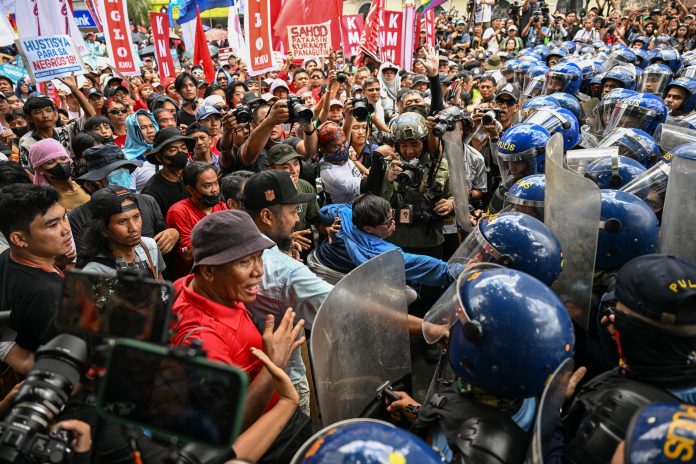
Church and labor groups on May 1 called for higher wages, stronger workers’ rights, and urgent policy reforms, warning that Filipino workers face deepening poverty, unsafe working conditions, and repression.
In separate International Workers’ Day statements, the Church People–Workers Solidarity (CWS), the National Council of Churches in the Philippines (NCCP), and the Center for Women’s Resources (CWR) pointed to a widening gap between wages and the cost of living, rising job insecurity, and increasing labor rights violations, with women workers bearing a disproportionate burden.
CWS said workers confront a “painful truth” as those who build the nation are “burdened by deepening poverty, insecurity, and injustice,” adding that many remain unheard “in their cry for dignity, just wages, and safe working conditions.”
The group cited data showing the Family Living Wage in Metro Manila has reached ₱1,266 per day, while the minimum wage stands at ₱695, calling the gap “not merely an economic issue” but “a moral failure.”
CWS also warned of deteriorating job quality, noting that unemployment has risen to 5.8 percent, with many new jobs described as insecure, contractual, and short-term. “Work that strips dignity, denies stability, and withholds rightful benefits cannot be called just work,” it said.
On workplace safety, the group said conditions remain dangerous, citing reports that at least one worker died each day in 2025 due to preventable accidents. “Every worker’s life is sacred. No profit margin can justify unsafe conditions,” the statement read.
The group also raised concerns over repression faced by labor advocates, saying the struggle for justice is “met not with dialogue, but with repression,” including harassment, arrests, and extrajudicial killings. “To organize is not a crime. To demand just wages is not subversion. To stand for dignity is not rebellion,” it said.
CWS linked worsening conditions to broader economic pressures, saying the ongoing energy crisis, “exacerbated by global tensions,” has driven up the cost of food, transport, and basic goods. It criticized the government’s refusal to suspend fuel taxes, saying it reflects “a troubling preference: short-term relief over long-term justice, profit over people.”
The NCCP echoed calls for a living wage, stressing that “the workers deserve fair compensation—not just any wage, but a living wage that enables them to support and protect their families under the roof of a decent home.”
The council said rising fuel prices and other basic commodities have further strained workers, while wages remain stagnant and “incredibly insufficient.” It also questioned current government responses, saying transport subsidies have been criticized for being inadequate and for ultimately benefiting oil companies.
NCCP called for more comprehensive measures, including suspending excise taxes on essential commodities and implementing policies to curb surging oil prices. It also urged the government to pursue a “more independent people-centered path” to address the country’s economic challenges.
Meanwhile, the Center for Women’s Resources highlighted how women workers bear a disproportionate share of the crisis, often relegated to low-paid, irregular, and unprotected jobs.
“Workers in the Philippines face a worsening labor landscape marked by meager wages that barely meet basic needs, persistent job insecurity, intensified labor flexibilization, and worsening safety and working conditions,” the group said.
It added that labor flexibilization traps workers in unstable, low-paying jobs with limited access to benefits and social protection, weakening their ability to unionize and secure protections.
CWR also pointed to systemic violations of labor rights, noting that the Philippines was listed among the 10 worst countries for workers in 2025 due to “systematic violation of labor rights, which include red-tagging, threats and intimidation, violent dispersal of strikes, and extrajudicial killings.”
Women, particularly from marginalized sectors, face compounded burdens, the group said, with many forced into survival strategies. Based on its interviews, CWR noted a pattern of women “resorting to extreme measures, such as skipping meals and reducing food intake, just to ensure their families survive.”
The group called for raising the minimum wage across regions to the family living wage of ₱1,200, removing value-added tax and excise tax on oil and other basic commodities, and upholding workers’ fundamental right to freedom of association.
“Now more than ever, CWR reaffirms its commitment to working towards a society where every worker is protected, empowered, and dignified,” it said, adding that “only through collective struggle can these goals be achieved.”
Across the statements, the groups urged government, employers, and civil society to address structural inequalities and uphold the dignity of work.
“A society that silences its workers undermines its own foundation,” CWS said.