Pakistan has stepped up as a key mediator in the United States–Iran conflict, with Catholic leaders and officials backing efforts to bring warring parties to the negotiating table as fears of wider escalation grow.
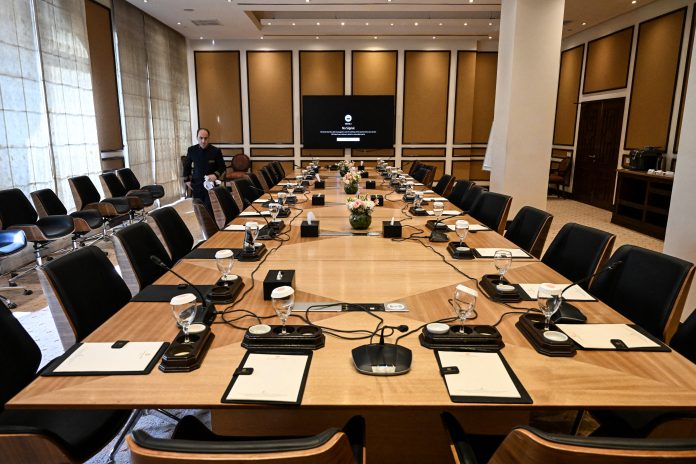
According to Fides News Agency, Islamabad has moved to convene actors involved in the conflict, positioning itself as a bridge amid mounting concern over the war’s global consequences.
Anthony Naveed, a Catholic politician from the Pakistan People’s Party and vice president of the Parliament of Sindh Province, said the government has taken the initiative to open dialogue despite the challenges.
“I am proud that Pakistan has done its utmost to bring together all the actors involved in the war in the Middle East and invite them to a negotiating table in Islamabad,” Naveed said, adding that “it is hardly possible to achieve a result in a single meeting” as mediation continues with allied and “peace-loving” countries.
“I believe that in this tragic situation, someone had to take the initiative and assume responsibility,” he added.
He warned that the consequences extend far beyond the region.
“Because of the war in the Middle East, not only are the countries of the region in difficulty, but practically the entire world is suffering the consequences,” Naveed said.
He warned that “escalation and a new world war are looming” and stressed that pursuing peace “benefits everyone and also corresponds to the Pope’s wish and appeal.”
Church voices in Pakistan echoed support, pointing to the country’s strategic position.
Father Robert McCulloch, an Australian missionary of the Society of St. Columban who has worked in Pakistan for more than 30 years, said Pakistan’s role “is quite logical,” citing its ties with Washington, its border with Iran, and its links with Gulf states.
“Pakistan’s involvement in mediating the US-Iranian war to achieve a ceasefire is quite logical, given that the country maintains relations with the US, shares a border with Iran, and has a Shiite population of about 20%, which has a clear affinity for Iran,” he said.
The priest added that its military alliance with Saudi Arabia and the United Arab Emirates makes it “an ideal mediator.”
Still, talks have yet to yield a breakthrough.
“If the mediation has stalled at the moment, even though it is not yet over, it is because the parties need to reach a consensus,” McCulloch said.
“You cannot go to a negotiating table with the attitude of simply presenting your own proposal without accepting compromises or changes, as the US has done,” he said. “Dialogue is essential in mediation,” he added, stressing the need to consider counter-proposals “without issuing an ultimatum.”
He said he hopes talks resume in the coming days and lead to “the long-awaited end of the war.”