Christians in southern Lebanon are choosing to stay in their villages despite intensifying Israeli bombardment, as isolation deepens and access to food and supplies becomes increasingly fragile.
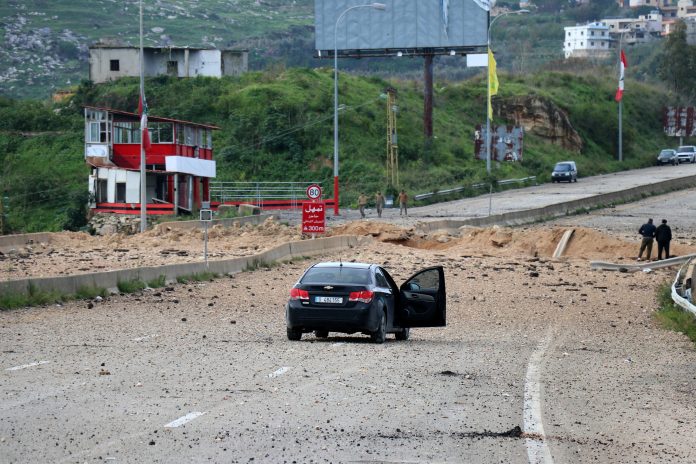
“We are practically cut off from the outside world. Only an old road can still be used and keeps us connected to Tyre,” said Father Toni Elias, a Maronite priest from the village of Rmeish, according to testimony shared with Fides News Agency, adding that a convoy carrying essential supplies was sent along the same route.
Rmeish, less than two kilometers from the Israeli border, is among the few Christian communities that have stayed in the south despite ongoing military operations. The municipality is distributing food to families, but uncertainty is growing over how long the lone access road will remain open.
Airstrikes have continued across southern Lebanon, with bombardments audible during the priest’s interview. A house in the nearby Christian village of Ain Ebel was struck overnight, “but fortunately, there were no deaths,” he said.
He also reported increased military activity near abandoned areas, saying “the sounds of Israeli tanks and bulldozers approaching a Christian village that had already been evacuated three weeks prior could be heard.”
Israel says its operations are aimed at dismantling Hezbollah positions, as the Iran-backed group continues to launch rockets into Israeli territory following renewed regional tensions linked to U.S.-Israeli strikes on Iran.
The bombardment has affected multiple parts of Lebanon, including Beirut, but southern Lebanon remains at the center of the conflict. Israeli Finance Minister Bezalel Smotrich has said the new border between Lebanon and Israel “must be the Litani River,” underscoring the strategic focus on the area, as bridges across the river have also been hit in recent strikes.
Despite the risks, Father Elias and many of his parishioners have decided to stay, describing their presence as both a witness of faith and a defense of their homeland. He said they are “the only ones left in these few Christian villages,” adding that as long as they remain, “this land will remain Lebanese land.”
He described their situation in stark terms, saying they are “resisting with our living flesh,” with nothing but prayer as their means of endurance, and warned that leaving would mean the disappearance of Christian life in southern Lebanon and the loss of generations of heritage.
Church leaders have continued to reach the isolated communities despite the risks. Father Elias said “the Apostolic Nuncio, Paolo Borgia, also visited, along with the Maronite Bishop of Tyre, Charbel Abdallah, and a representative of the Patriarch.”
A humanitarian convoy organized by Catholic groups accompanied the visit, which he described as “a testament to the unity of the entire Church,” offering comfort to communities under siege.
Amid the escalation, the priest reflected on the broader human cost of the conflict, lamenting that “only the law of the strongest prevails.”