A leading Church official in the Philippines called on Catholics to confront corruption and structural injustice as the Church renews its mission among communities living in poverty.
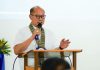
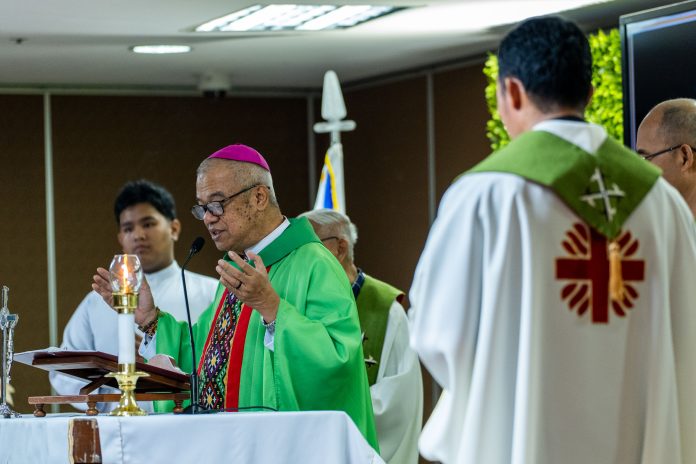
Bishop Gerardo Alminaza of San Carlos made the call in a message to Columban missionaries gathered for their Joint Area Meeting in the Philippines on March 16, saying the Gospel must be lived where “the wounds of society are most visible.”
Opening his reflection with questions about the persistence of poverty, Alminaza asked: “Why do children still die from poverty in a land that is rich with resources? Why do communities remain poor even when development projects are everywhere? And why does injustice continue even in societies that profess faith?”
The bishop thanked Columban missionaries for decades of work among marginalized communities, noting that many had accompanied people “in some of the most difficult moments of our history—among farmers struggling for land, workers seeking dignity, Indigenous Peoples defending their ancestral domains, and families trying to survive amid poverty and injustice.”
Their witness, he said, helped shape the social conscience of the local Church by showing that “the Gospel cannot remain distant from the suffering of the poor.”
Recalling the experiences of Columban missionaries in Negros, Alminaza pointed to the ministry of Fr. Brian Gore in Kabankalan, where nearly half of the burial Masses he celebrated were for infants who died before their first birthday.
The reality led Gore to ask, “Why are these children dying so young?”
Alminaza said the missionary eventually realized that “this was not God’s will,” but the result of social conditions including “poverty, malnutrition, lack of healthcare, and structural injustice.”
He warned that similar patterns remain visible today, as corruption continues to undermine public institutions and deepen inequality.
“Corruption continues to wound our society,” the bishop said, noting that when “public funds meant for schools disappear,” health services weaken and infrastructure projects fail, leaving the poor to bear the consequences.
He added that corruption should not be viewed only as financial misconduct but as “stolen opportunities for human dignity.”
Alminaza, who chairs the Catholic Bishops’ Conference of the Philippines’ Commission on Social Action, Justice and Peace and leads Caritas Philippines, said the Church’s mission must confront corruption, inequality, and other structural injustices that continue to trap many Filipinos in poverty.
Addressing Columban missionaries, he urged the Church to stand with marginalized communities while promoting transparency, citizen participation, and ethical governance.
These efforts include partnerships with government agencies and civil society groups to monitor public infrastructure projects and ensure social protection programs reach vulnerable communities.
Such initiatives, he said, aim to transform the spirit of the People Power movement into “a culture of participation in everyday governance,” where communities help monitor programs, raise questions and contribute to solutions.
The bishop warned that corruption often grows through what he described as “tolerated evils,” noting that wrongdoing rarely begins with large scandals but with small compromises that gradually become accepted as normal.
Using an image familiar to fisherfolk, Alminaza said corruption creates “many holes in the net of society,” allowing resources intended for the public to slip away.
For the Church, he said, the mission of evangelization includes helping repair the social fabric damaged by injustice.
“The work of mission is not only to preach the Gospel,” Alminaza said, but also “to help mend the torn nets of society.”
That work, he added, unfolds gradually through acts of courage and solidarity, carried out “one knot of justice at a time, one act of courage at a time, one community at a time.”