
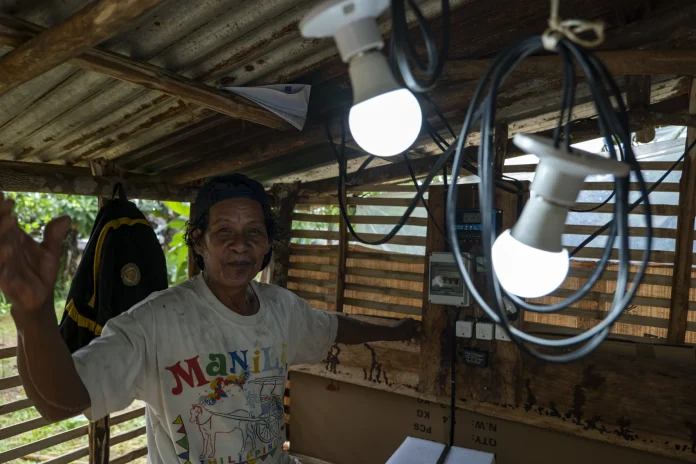
Church and environmental advocates urged Oriental Mindoro to accelerate its transition to renewable energy after the provincial government imposed conservation measures amid global oil supply disruptions.
Energy and environmental groups said the recent policy highlights the vulnerability of island provinces that depend heavily on imported fossil fuels for electricity.
Under Executive Order No. 04, series of 2026, the provincial government temporarily compressed the workweek for government employees and introduced energy conservation measures.
These include reducing air-conditioning use in offices, limiting the deployment of government vehicles, and prioritizing online meetings.
“Conservation measures are an important immediate response, but they also remind us of the deeper challenge we face,” said Fr. Edwin Gariguez, head of the social action arm of the Catholic Church in Calapan and convenor of the Protect the Verde Island Passage network.
“As long as island provinces depend heavily on imported fossil fuels for electricity, communities will remain vulnerable to global crises that are beyond our control,” he said.
Reports have warned that diesel-dependent off-grid areas in the Philippines may face rising electricity costs if global oil prices continue to increase.
Advocates said Oriental Mindoro already has policy foundations supporting a shift to renewable energy.
In 2023, the provincial government declared the province a “province promoting the innovative development and efficient utilization of clean and renewable energy” and mandated the establishment of a Provincial Power and Energy Council.
“The province has long recognized the importance of renewable energy. What is needed now is to accelerate implementation so that communities can benefit from affordable, reliable, clean energy,” said Atty. Avril De Torres of the Center for Energy, Ecology, and Development.
“Distributed systems like solar rooftops are, at this time, not just a strategic long-term endeavor, but an immediately deployable solution that can cushion the impacts of the crisis for communities in Mindoro and throughout the country,” she added.
Across Mindoro, several grassroots initiatives are demonstrating the viability of renewable energy solutions.
Indigenous Mangyan communities have begun using decentralized solar systems to power community facilities and provide electricity in off-grid areas.
The Apostolic Vicariate of Calapan has also begun implementing its energy transition roadmap, which aims to install solar systems in parishes, schools, and church facilities as part of preparations for its 75th anniversary.
Gariguez said shifting away from fossil fuels would also help protect the Verde Island Passage, one of the world’s most biodiverse marine ecosystems.
“Moving away from fossil fuels is not only about energy security but also about protecting the biodiversity of the Verde Island Passage and safeguarding the livelihoods of coastal communities that depend on healthy marine ecosystems,” he said.
“Energy conservation is an important immediate step,” Gariguez added. “But the long-term solution for Mindoro is a full transition toward renewable energy so that we provide electricity that becomes truly mura, maaasahan, at malinis for every Mindoreño.”