A leading Philippine Church official warned that modern warfare, increasingly conducted through digital command systems, drones, and artificial intelligence, risks obscuring the human suffering behind armed conflict.
Cardinal Pablo Virgilio David of Kalookan made the observation as tensions escalated in the Middle East after the United States and Israel carried out coordinated strikes on Iran on Feb. 28.
The operation triggered Iranian missile and drone attacks across the region and raised fears of a broader confrontation.
Reflecting on the unfolding crisis, the prelate said the conflict has moved quickly beyond what was initially presented as a limited military action.
“On February 28, the United States and Israel launched what they called a pre-emptive strike against Iran,” he wrote. The attack, he said, has “quickly spiraled into a widening regional war.”
The strikes targeted Iranian military and strategic sites. Iran responded with attacks on Israel and on U.S. military installations across the Gulf, widening the geographic scope of the confrontation.
David noted that the conflict now touches a wide arc of countries in the region. In his reflection, he wrote that “the map of the conflict began to widen” to include Lebanon, Iraq, Jordan, Saudi Arabia, Qatar, Kuwait, Bahrain, the United Arab Emirates, and Oman, where American bases are located.
“In less than a week,” he added, “the war has already spilled across more than a dozen countries.”
What troubles him most, he wrote, is the way modern technology has reshaped how wars are fought.
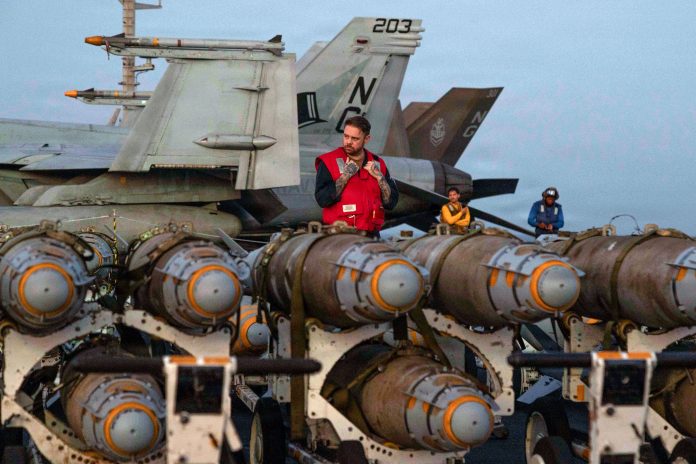
The conflict, David suggested, may be “the first war conducted almost entirely through digital command systems, drones, satellites, and artificial intelligence.”
Military operators, he wrote, watch screens “where maps, radar signals, and algorithm-generated targets move like icons in a computer game.”
He described the sequence in stark terms: “A cursor moves. A coordinate is selected. A click is made. And a missile is launched.”
Technology can create the impression that war is controlled and almost clinical. David called this “the terrible illusion” of digital warfare.
It “feels clean and clinical,” he wrote, and gives the impression that war can be “managed like a technological exercise.”
But the reality, he said, lies far from the screens where decisions are made.
“The screen does not show what happens when the missile lands,” he wrote. On the ground are civilians whose lives have nothing to do with military strategy — “children asleep in their beds, mothers preparing meals, elderly people who cannot run fast enough to reach a shelter.”
Air defense systems may intercept some missiles, but others reach their targets. When that happens, he wrote, they “explode where people live—inside apartment blocks, hospitals, hotels, crowded streets.”
“And when the smoke clears,” David added, “the casualties are not symbols on a screen. They are human beings.”
He also warned that the consequences of the conflict will extend beyond the battlefield. The Gulf region hosts “millions of migrant workers who left their homelands to earn a living for their families,” including large numbers of Filipinos.
Many work in homes, hospitals, hotels, and construction sites. Others serve as seafarers navigating vital shipping lanes.
“If these waters become a war zone,” he wrote, “it is these workers who will face the danger first.”
David also questioned who ultimately benefits from such conflicts. “The ones who stand to profit most,” he said, “are the industries that manufacture weapons and feed on endless conflict.”
He ended his reflection with a warning about how easily wars can now begin.
“The tragedy of war is not only the destruction it causes,” he wrote. “It is also the frightening ease with which it can be started.”
Modern technology, he said, allows wars to be launched “with the casual ease of pressing a button.”
“Those who command the screens rarely see the bodies.”