The Asia Pacific Province of the Religious of the Assumption has issued a reflection calling Catholic education in Asia to move beyond instruction toward encounter, presence, and humanizing formation.
Released Feb. 6, the article Encounter, Not Instruction: Why Catholic Education Matters Today signals a shift from the transmission of doctrine to the cultivation of humanizing, transformative experiences.
For the Church in Asia, where Catholics often find themselves as a “little flock” amid vast pluralistic landscapes, the vision offers a roadmap for a mission rooted in presence rather than proselytization.
The “Magisterium Anchor”: Education as integral encounter
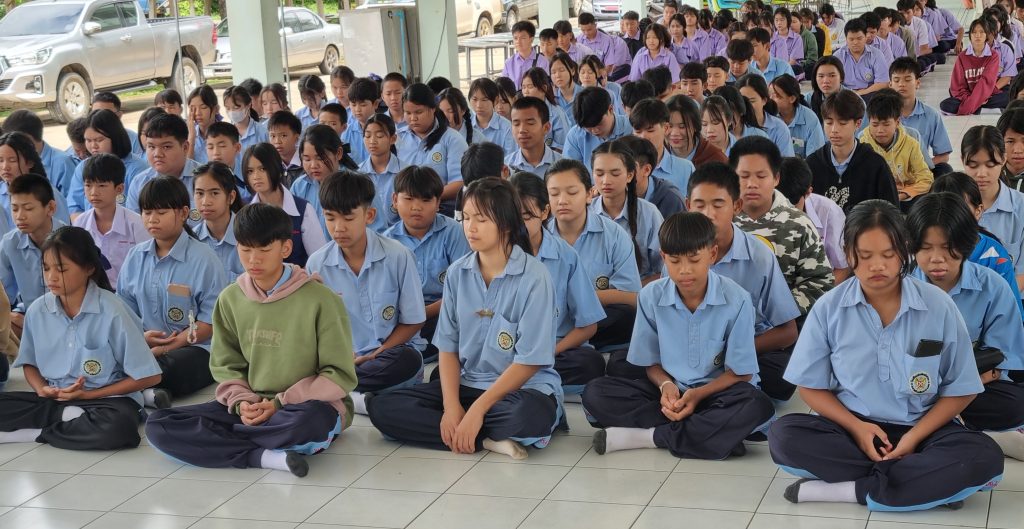
The heart of the province’s reflection aligns with the Church’s broader call for an “integral education” that engages the mind, heart, and soul.
In a world saturated with information, the document argues that faith is not effectively communicated through instruction alone. Instead, it flourishes within “meaningful experiences of encounter” and “humanizing educational environments.”
“Catholic education cannot be reduced to the transmission of doctrinal content… it is an integral process seeking to foster a personal and communal relationship with Christ.”
This mirrors the foundational charism of St. Marie Eugenie, foundress of the Religious of the Assumption, who viewed education as a way to “make the Earth a place of glory for God.”
Education, the reflection adds, is a service to both the person and society, where the educator serves not only as a teacher but also as a credible witness and mediator.
The Thai context: A quiet revolution of presence
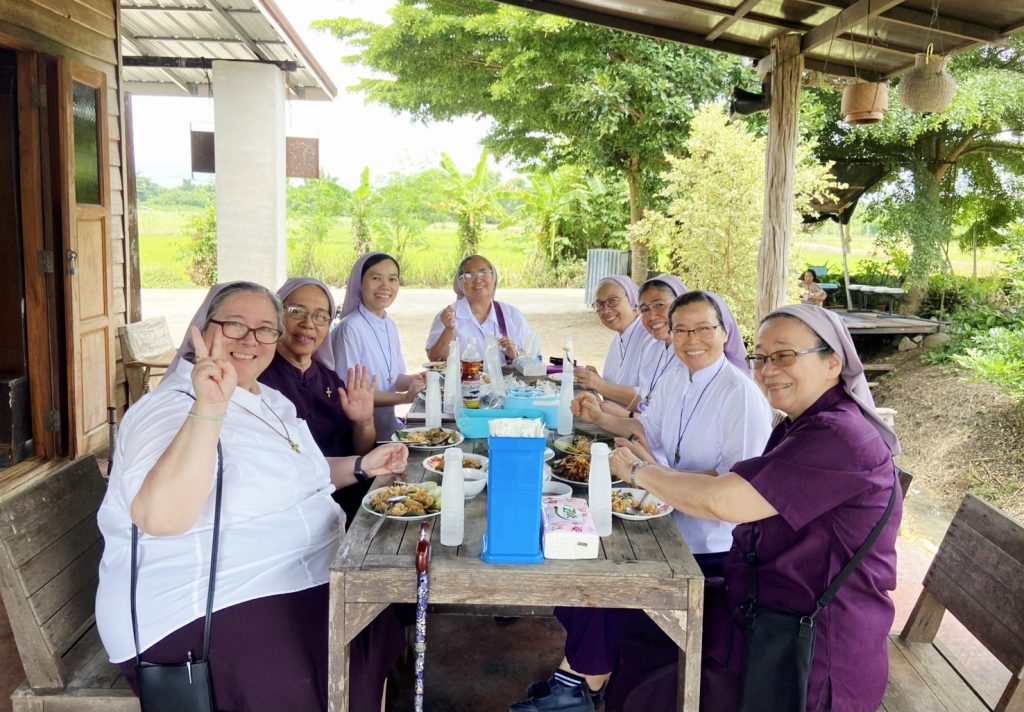
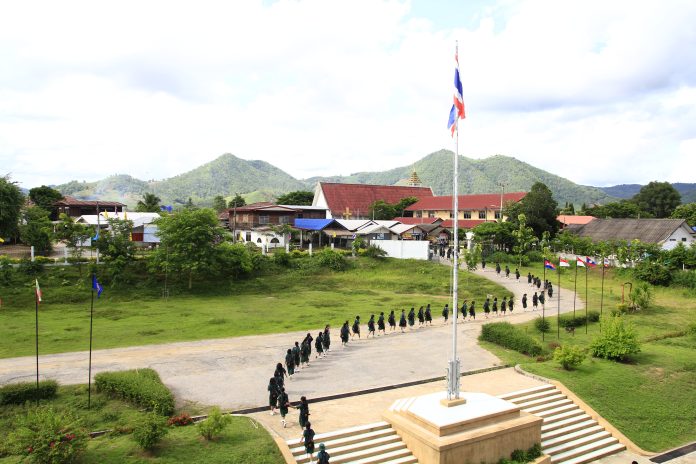
Photo credit: RA Thabom community
In Thailand, where Catholics comprise about 0.58% of a predominantly Buddhist population, the Assumption mission takes on a distinct pastoral sensitivity.
While many Catholic schools in the country are prestigious urban institutions, the RA sisters in the Thabom community, a rural village in northeastern Thailand, demonstrate the “humanistic lens” in practice.
In Thabom, where most teachers and students are Buddhist, the transmission of faith is described as a “quiet revolution powered by love.” The approach prioritizes:
• Interreligious dialogue: Reflecting Pope Francis’ 2019 call for closer collaboration between Catholics and Buddhists.
• Life witnessing: In non-Christian contexts, the sisters offer a “nurturing maternal presence,” where faith is expressed through charity and moral integrity.
• Accompaniment: Creating spaces of hospitality where faith is proposed without imposition and received in freedom.
The reflection is already influencing local practice. Sr. Deanna Maria Combong, RA, school superior of St. John’s School Thabom, said the insights have been integrated into the school’s upcoming spiritual preparation.
“I found the article very good; it applies to us in Thabom,” Combong said. She plans to use the text during the annual teacher formation sessions in May, to be led by Fr. Joseph Charan Thongpiyaphum, SDB, to ensure the mission remains rooted in discernment and the search for meaning.
The story of the Religious of the Assumption in Asia, from the corridors of Metro Manila to the rice fields of Thailand, is not measured in statistics but in lives transformed.
By moving from “instruction” to “encounter,” the sisters continue to show that the most powerful classroom is a life lived in service to others, where cultural dialogue and village life become the ground where the divine is encountered.