The United States Commission on International Religious Freedom (USCIRF) 2025 Annual Report has again recommended that China be redesignated as a “Country of Particular Concern” (CPC).
The report pointed to what it describes as systematic, ongoing, and egregious violations of religious freedom in 2024.
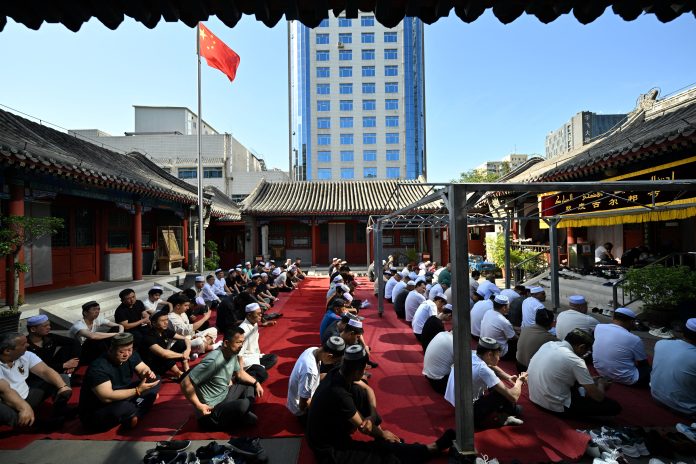
The report said the Chinese Communist Party (CCP), under President Xi Jinping, tightened its campaign of “sinicization of religion,” which requires all recognized faiths to conform to state ideology.
Amendments to religious regulations in Xinjiang and new directives by provincial leaders further entrenched controls, particularly targeting the region’s Muslim communities.
According to USCIRF, the victims of Beijing’s repression span nearly every major religious community. Uyghur Muslims remained under intense persecution, with many imprisoned for routine religious activities such as charitable giving or teaching.
In February 2024, Imam Abidin Damollam, aged 96, died in prison while serving a nine-year sentence for allegedly promoting “religious extremism”.
Tibetan Buddhists also faced heavy restrictions. Authorities banned the admission of new monks in monasteries, closed religious schools, and forced children into state-run boarding schools as part of a broader assimilation drive.
Public or even private references to the Dalai Lama led to arrests, while officials signaled their intention to interfere in the Dalai Lama’s eventual succession.
Christians were not spared. Underground Catholic clergy who resisted joining the state-sanctioned church were detained or disappeared, while Protestant house churches endured raids and harassment.
In January 2024, Pastor Kan Xiaoyong was sentenced to 14 years in prison on what the report described as fabricated charges.
Falun Gong practitioners and members of the Church of Almighty God continued to be branded as belonging to “illegal cults,” with thousands arrested and mistreated.
Reports included deaths in custody, such as those of Falun Gong practitioner Xu Na and CAG member Mo Xiufeng.
The commission also raised alarm over Hong Kong’s new national security law, Article 23, which has heightened concerns about religious freedom.
Some imprisoned activists have alleged that they were denied access to religious materials.
Beyond its borders, China continued to deploy technology and transnational repression to silence critics abroad, with diaspora activists reporting surveillance, intimidation, and retaliation against family members back home.
The international community also voiced concern. In 2024, the United Nations’ Office of the High Commissioner for Human Rights said there had been no meaningful progress on religious and minority rights in Xinjiang, while the UN Human Rights Council’s Universal Periodic Review called on Beijing to repeal discriminatory policies and ratify international treaties.
Washington responded with a mix of sanctions and legislative action. The U.S. government imposed visa restrictions on Chinese officials linked to abuses, renewed the Uyghur Human Rights Policy Act, and strengthened enforcement of the Uyghur Forced Labor Prevention Act.
President Joe Biden also signed into law the Promoting a Resolution to the Tibet-China Dispute Act, which directs the State Department to counter Beijing’s disinformation about Tibetan institutions, including the Dalai Lama.
In its recommendations, USCIRF urged the U.S. government to keep China on its CPC list, coordinate with international partners to sanction officials responsible for religious repression, and address Beijing’s use of advanced technologies such as artificial intelligence and genetic data collection in its campaign against faith communities.
The commission further called on Congress to tighten restrictions on technology transfers, bar paid lobbying by Chinese state-linked entities in the United States, and continue raising the issue of religious persecution through hearings, delegation visits, and public pressure.