The Catholic Church in Cambodia has condemned the outbreak of violence along the country’s border with Thailand, describing the renewed fighting as a “truly senseless” war driven by nationalism and political tensions.
“We have woken up to the nightmare of a war,” said Jesuit Father Enrique Figaredo, Apostolic Prefect of Battambang, in an interview with the Vatican’s Fides News Agency.
“Military clashes have broken out again on the border between Cambodia and Thailand, and the situation is very tense and worrying, with the use of powerful military vehicles and fighter jets,” he added.
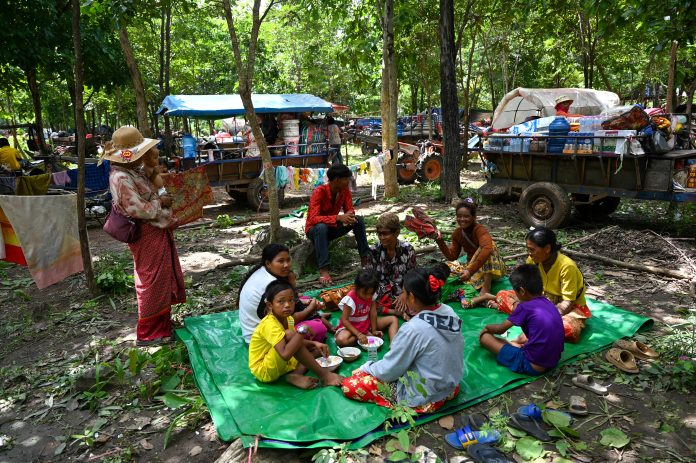
The fighting, which erupted on July 24 in the disputed area near the Ta Moan Thom temple, has prompted mass evacuations and raised fears of a wider regional conflict.
Thai authorities have accused Cambodian forces of opening fire, while Cambodia’s defense ministry said it responded to a Thai incursion in self-defense. The Thai military has since launched airstrikes and artillery attacks on Cambodian positions.
“Our parish of St. Francis of Assisi is located less than 100 kilometers from the front lines,” said Fr. Figaredo, adding, “There is great fear of a war that seems truly senseless.”
Figaredo underscored the human toll of the conflict, pointing out that communities on both sides of the border are closely linked by language and family ties.
He said the local population is struggling to understand the rationale behind the renewed hostilities, which he attributed to rising nationalism and imperial ambitions.
He attributed the long-standing border dispute to conflicting maps inherited from colonial powers. “The border established by France when it left the area was followed and marked, but Thailand follows another map, the American one, and claims several areas, some of great historical, cultural, and religious value for their Buddhist temples,” he explained.
Fr. Figaredo also warned that the resurgence of violence may be driven by internal political dynamics in Thailand, where nationalist sentiment appears to be on the rise.
He noted that Thailand’s military advantage over Cambodia could embolden its stance in the conflict.
To prevent further escalation, he stressed the need for international mediation, particularly through the intervention of the United Nations.
As the conflict continues, Caritas Cambodia has dispatched a delegation to assist families displaced from villages near the front lines.
Human rights group Fortify Rights also voiced concern over the military escalation. “Today’s military escalation along the Thailand-Cambodia border is deeply concerning, and Fortify Rights urges both sides to exercise caution and restraint,” said Patrick Phongsathorn, Senior Advocate at Fortify Rights.
Fortify Rights emphasized that international law obliges all parties in armed conflict to protect civilians and civilian infrastructure from attack.
The group urged both Thai and Cambodian forces to take all necessary precautions to prevent harm to non-combatants and to avoid damage to critical infrastructure.
It also called on both governments to respect their commitments under the Ottawa Convention and ensure that human rights are upheld throughout the course of military operations.
Thai officials have reported 15 deaths on their side — including 14 civilians and one soldier — and 46 injuries. Cambodian authorities confirmed one civilian fatality and five wounded in Oddar Meanchey province. Over 138,000 people have been evacuated from Thai border regions.
Thailand’s acting Prime Minister Phumtham Wechayachai warned that the situation “could develop into war,” though he said it remains limited to border clashes for now.
Cambodian Prime Minister Hun Manet has requested an emergency session of the UN Security Council. Regional and international actors — including ASEAN, the United States, France, and China — have urged both sides to halt hostilities and return to dialogue.