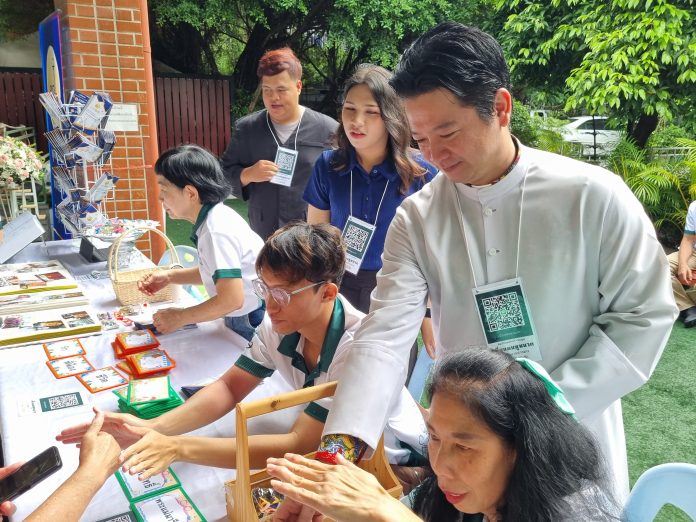
Deaf and hard-of-hearing Catholics gathered at St. Louis Church in Bangkok on Sunday, July 20, for a special “Open House” event celebrating the Church’s Jubilee 2025: Pilgrims of Hope.
The event welcomed participants from across Bangkok and neighboring provinces, highlighting the Church’s growing commitment to accessibility, inclusion, and pastoral care for one of its most underserved communities.
Fr. Peter Bhuravaj Searaariyah, chaplain of the Deaf Catholic Association of Thailand, told LiCAS News that the gathering aimed to address the deep sense of isolation many deaf and hard-of-hearing individuals experience, especially in religious settings where communication barriers remain high.
“This gathering is not only a moment of joy and solidarity,” Fr. Peter said, “but also a pastoral response to the deep needs of people who often feel unseen in our churches. By bringing them together and meeting with other faithful, they experience the support of community, and feel the love of God in a language they understand.”
Appointed by the Catholic Bishops’ Conference of Thailand (CBCT) as the national coordinator for Deaf Ministry, Fr. Peter has been leading efforts to improve access through sign language interpretation, Bible sharing, rosary prayer, retreats, and the creation of more welcoming worship environments.
He is also developing a unique “picture language” version of the Bible to make Scripture more accessible to deaf Catholics.
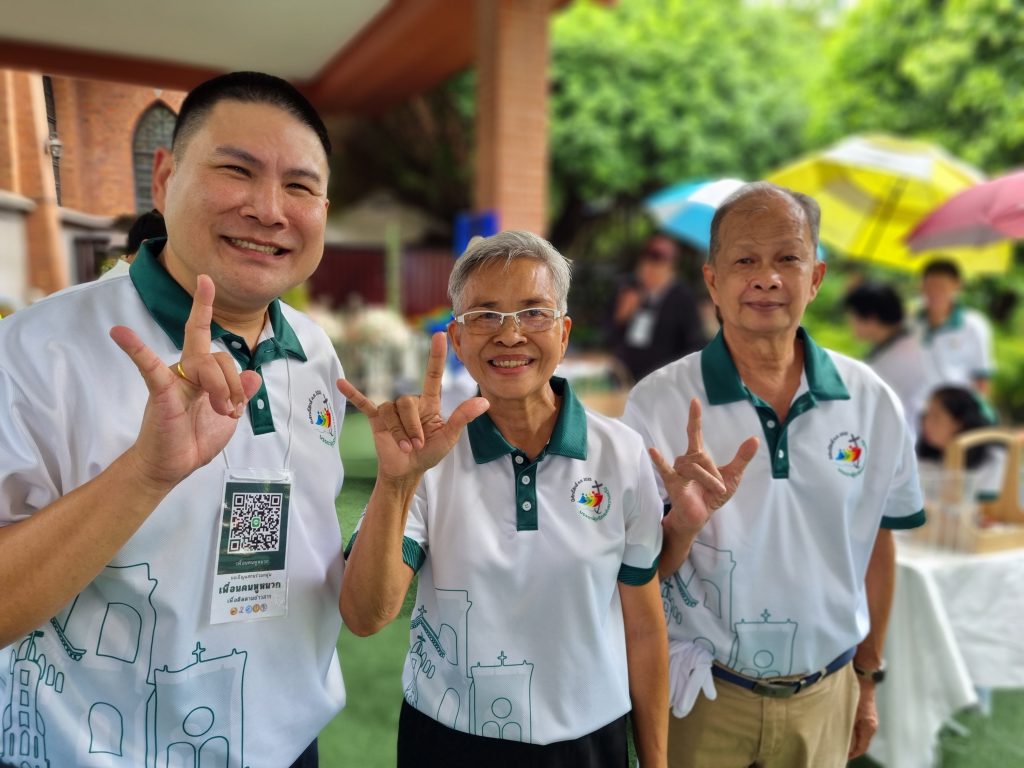
Mr. Narong Thanomlek, the first Catholic graduate with a bachelor’s degree in Sign Language Teaching from the Princess Sirindhorn Institute, emphasized the complexity of the ministry: “Sign language is not universal. Each country has its own sign language with unique grammar and vocabulary.
It relies on hand shapes, movement, facial expression, and body language—elements that are often absent in traditional church services.”
For decades, deaf Catholics in Thailand have struggled to feel a sense of belonging in their faith communities. Yindee Poonvithayakij, now in her sixties, lost her hearing at age 12—and with it, her connection to the Church.
Unable to understand the spoken Mass or communicate in confession, she once wrote down her sins on paper—only to have it rejected and crumpled by the priest, who scolded, “This is not a way of confession.” “That moment broke me,” she later said. “I lost my Christian life that day.”
Now, years later, Yindee stood joyfully among fellow deaf Catholics, volunteering at Sunday’s event with a smile that bore witness to healing and hope.
Despite these advances, Fr. Peter noted that many challenges remain. “We have only two trained sign language teachers, with two more currently in their final year of training. Out of eleven dioceses in Thailand, only two offer meaningful support to deaf Catholics. This group remains one of the most unreached communities in our Church here.”
Many deaf Catholics simply stop attending Mass because they cannot understand or fully participate. Fr. Peter emphasized that this lack of support contributes to their sense of spiritual exclusion. But hope is rising, especially with preparations underway for the Asian Deaf Catholic Congress in Korea next year.
“We want our people to attend and return with renewed faith and a louder voice to help the Church hierarchy better understand their needs,” he said. “We are also focusing on helping deaf individuals envision God and the incarnate Jesus as truly accessible and relatable to them.”
He noted that many deaf children grow up in homes where no one speaks sign language fluently, making family communication and religious formation extremely limited, and emphasized that the Church has both a unique opportunity and a responsibility to bridge that gap.
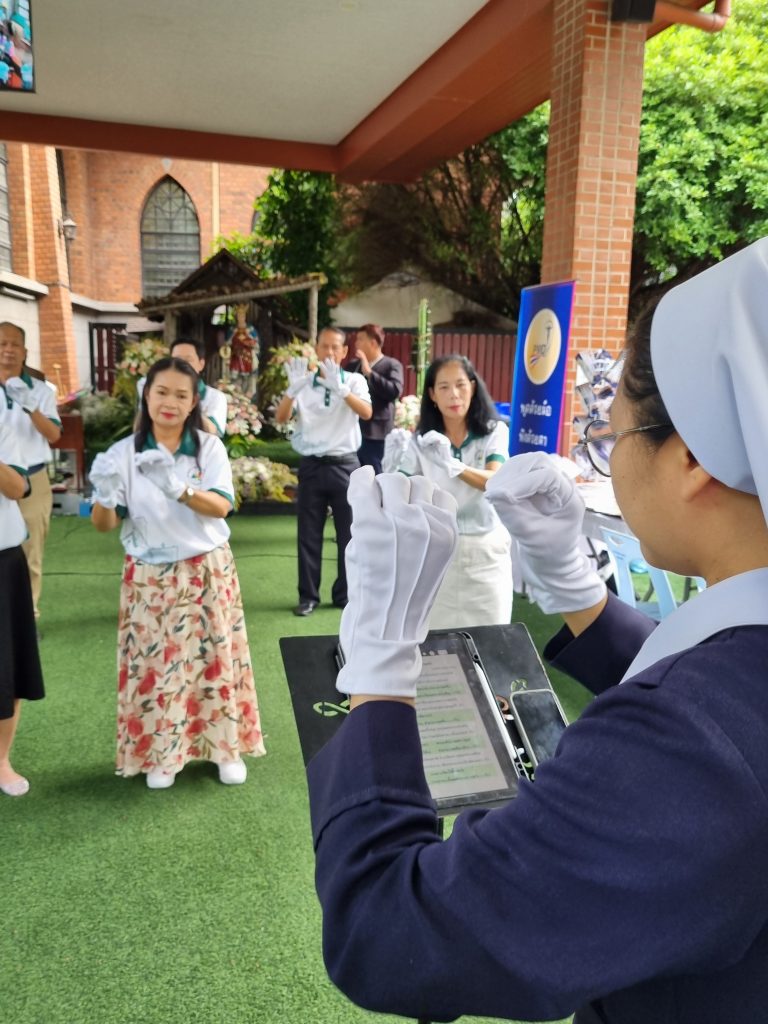
“We must proclaim Christ clearly in the Deaf World,” he said. “God is not only for hearing people. Deaf individuals are created in the image of God and for His glory. We are beginning to see non-Catholics express interest in joining the Church—because they finally feel seen and loved.”
One participant shared through an interpreter: “Before I joined this group, I felt anxiety, isolation, and frustration. I was always left out of conversations, voiceless, and felt invisible. Now, I feel joy. I look forward to coming every Sunday.”
For many in the community, St. Louis Church and the Holy Spirit Chapel at the adjacent St. Louis Hospital have become places of spiritual refuge—offering Sunday Mass in sign language, confessions, adoration, and community fellowship tailored to their needs.
As the Jubilee Year is being celebrated across the world, Thailand’s Deaf Catholic community is sending a powerful message: they are not forgotten. They are not invisible. They are pilgrims of hope, proclaiming a Gospel that speaks not only to ears—but also to hearts and hands.