Farmers and fisherfolk groups in the Philippines are demanding immediate government assistance as worsening El Niño conditions damage crops, raise fishing costs, and threaten food production across the country.
The Kilusang Magbubukid ng Pilipinas (KMP) called for the immediate release of government funds for El Niño response as farmers begin to lose harvests and income.
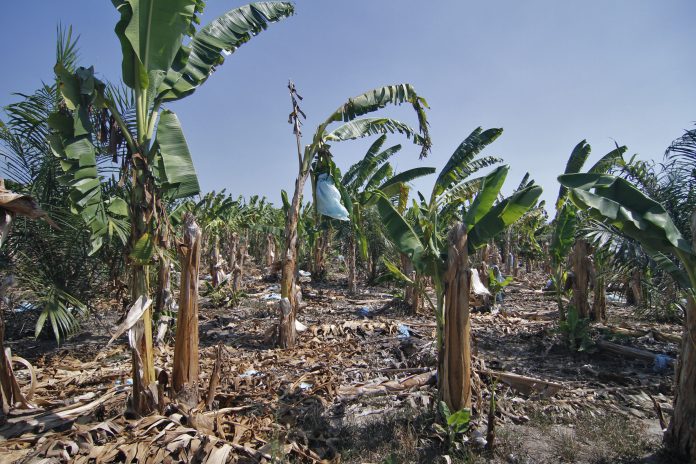
Agricultural damage and production losses have reached P5.56 billion, while 223,497 hectares of crops have been affected, including 41,164 hectares with total crop loss, according to Department of Agriculture data cited by KMP.
Authorities declared 106 localities under a state of calamity, affecting 388,375 people, or 104,149 families. It identified Cagayan, Bicol, CALABARZON, Caraga and Soccsksargen among the hardest-hit areas.
“Agencies must immediately release the remaining funds for its El Niño response. The delay is unacceptable as the agricultural crisis is already worsening and drought threatens the country’s food production,” said KMP Secretary General Ronnie Manalo.
KMP said only P6.2 billion of the P45 billion requested under the government’s UPLIFT program has so far been released.
The amount includes P2.2 billion for fertilizer support and P1 billion each for farmer fuel assistance, fisherfolk fuel assistance, Presidential Assistance for Farmers and Fisherfolk, and fuel subsidies for agricultural transport or truckers.
Manalo said it was not enough for the Department of Agriculture to say that P45 billion had been allocated for El Niño response.
“The farmers’ questions are: How much has actually been received, when will the others receive assistance, and how many will really benefit?” he said.
KMP also called for transparent accounting of assistance already distributed and a nationwide program providing direct production support before drought conditions worsen.
The group sought subsidized fuel and fertilizer, irrigation assistance and guaranteed government procurement of palay.
“We do not need promises of billions. What is needed is actual, adequate and immediate support so farmers can plant and harvest food for the people,” Manalo said.
The Amihan National Federation of Peasant Women also warned that prolonged drought and extreme heat could deepen the agricultural and food crisis confronting farmers, fisherfolk and consumers.
The group said the Department of Agriculture projects rice production could fall by as much as 700,000 metric tons, or 3.5% of its annual target.
Amihan said peasant women face added pressure as crop losses threaten their livelihoods while household spending on food, water and other basic needs increases.
The group criticized proposals to shift farmers away from rice production because of its irrigation requirements.
“We condemn the statement of the Climate Change Commission under Dela Cruz recommending that rice be replaced with other crops because of its heavy irrigation requirements. Instead of addressing the needs of farmers and the food crisis, this would further weaken our rice industry. It is a great insult to say that the food crisis will disappear if people eat rice only once a day,” said Cathy Estavillo, Amihan secretary-general and Bantay Bigas spokesperson.
Amihan also warned against increasing dependence on rice imports as El Niño affects agricultural production elsewhere in Southeast Asia.
It said production declines in major rice-exporting countries such as India, Vietnam and Thailand could tighten global supplies and push food prices higher.
“We should not use El Niño to further deepen our dependence on imports. Importation will not ease the current crisis. Instead, it further underscores the need to strengthen local production,” Estavillo said.
Fisherfolk groups also warned that extreme heat could add to the burden of small-scale fishing communities already struggling with high fuel costs.
The Pambansang Lakas ng Kilusang Mamamalakaya ng Pilipinas (PAMALAKAYA) said fish and other marine life move farther and deeper during periods of intense heat in search of cooler waters, forcing fishers to travel longer distances and consume more fuel.
PAMALAKAYA National Chairperson Fernando Hicap said such conditions could become increasingly difficult for small-scale fishers to absorb.
“The movement of fish during periods of extreme heat is unusual. They move farther away and into deeper waters to avoid warmer parts of the sea. This will force fishers to travel farther and consume more fuel just to catch fish.
“But with fuel prices still very high, small-scale fishers will no longer be able to cope with these changing conditions,” Hicap said.
In Zambales, fisherfolk also raised concerns over heat-related illnesses among those spending long hours at sea.
Roselyn Regalado, president of the Subic-based Samahan ng Cabangaan 3 Fishermen’s Unity and a barangay health worker, said fishers face direct exposure to intense sunlight and high humidity.
“The looming Super El Niño will not only affect fish catch but also poses a serious threat to the health of fishers. Our livelihood literally keeps us under the sun, so we are not safe from the various illnesses that can result from extreme heat.
“In our town alone, there have already been many cases of fishers suffering heat stroke and high blood pressure while out at sea. These cases are not immediately addressed because of the lack of equipment and training in first-aid response,” Regalado said.
PAMALAKAYA called for sufficient fuel subsidies, economic assistance for fishing families unable to return to sea, and first-aid kits and emergency-response training for fishing communities.
Hicap said many fishers had only recently returned to sea after more than three months of the southwest monsoon and had yet to recover from high fuel costs.
“We have only just returned to sea after more than three months of the southwest monsoon. We have not yet recovered because of high fuel prices. Now we are again facing the destructive effects of El Niño.
“If the government does not respond in a concrete and comprehensive way, agricultural and fisheries production will certainly fall sharply,” Hicap said.