Archbishop Alberto Uy said Tuesday the Archdiocese of Cebu must urgently strengthen priestly vocations and long-term pastoral planning as its clergy steadily ages, raising concerns about future ministry demands.
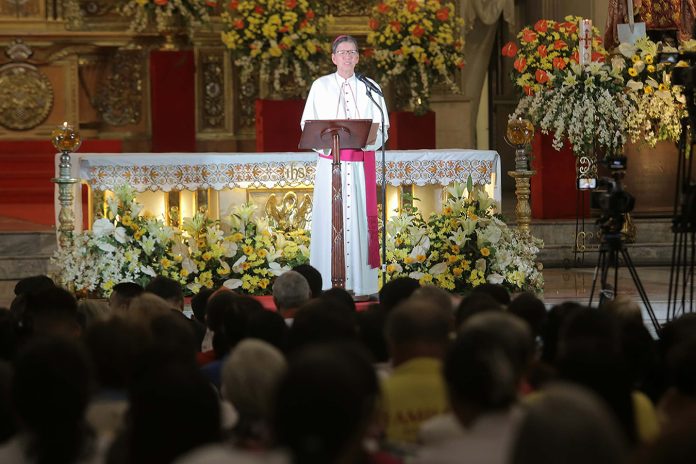
In his first-ever State of the Archdiocese Address at the Cebu Metropolitan Cathedral, Uy said Cebu’s 386 diocesan priests remain stable for now, but demographic trends point to mounting pastoral pressure.
Those priests currently serve more than 170 parishes ministering to over 4.6 million Catholics, making the archdiocese one of the country’s largest and placing growing demands on its clergy.
Nearly 60% of Cebu’s priests are already 50 years old or older, while about one-third are at least 60, leaving the archdiocese increasingly dependent on senior clergy.
“The number of young clergy remains relatively small, which means that although ministry is still being sustained well at present, there is an increasing dependence on older priests whose capacity will naturally decline in the coming years,” Uy said.
He said that within the next eight years, a significant number of priests are expected to retire or reduce active ministry, creating potential pastoral shortages unless vocations increase.
“What lies ahead is not a crisis yet — but it is a clear invitation to prepare now,” Uy said.
The archbishop called for intensified vocation promotion, stronger priestly formation and broader empowerment of lay leaders to help sustain the Church’s mission.
Cebu’s diocesan seminaries currently serve 225 seminarians for the academic year, with updated formation programs aligned with Vatican and national priestly training standards.
Uy said expanded formator teams, upgraded facilities and more coherent developmental structures are strengthening preparations for future clergy.
Meanwhile, the archdiocese’s Office for Vocation Promotion has broadened school-based campaigns through partnerships with government education agencies, youth ministries and parishes.
“Vocations do not grow in isolation,” Uy said. “They grow in a community that prays, supports, and journeys together.”
The address marked a historic first for the archdiocese, following consultations with clergy and lay leaders to assess the local Church’s present condition and future direction.
Beyond clergy concerns, Uy also outlined wider institutional reforms aimed at strengthening parishes, finances and worker welfare across the archdiocese.
He said every parish and quasi-parish is being guided to create comprehensive development plans covering pastoral, spiritual, social and infrastructure priorities.
The archdiocese is also pursuing a unified financial system designed to improve transparency, accountability and responsible stewardship of Church resources.
Uy said financial reforms would help support free hospitalization for priests while maximizing church properties for sustainable mission funding.
He also announced the creation of a human resource board to safeguard fair compensation, formation and professional support for lay workers.