The head of the social action arm of the Catholic Church in the Philippines called on Church workers to slow down, listen to the “hidden cries” of marginalized communities, and sustain long-term accountability.
Speaking at the National Social Action General Assembly (NASAGA) 2026 in Tagaytay City, Bishop Gerardo Alminaza, president of Caritas Philippines, said the Gospel challenges the Church to listen beyond urgency and noise, particularly to the often-hidden suffering of marginalized communities.
“God’s saving work is not rushed, but it is attentive,” Alminaza said, reflecting on the Gospel account of Jesus stopping to heal a woman who had been bleeding for 12 years while on his way to the house of Jairus.
The bishop said Jesus’ refusal to rush, despite pressure from the crowd and the urgency of a dying child, offers a model for Church social action today.
“Jesus is not listening to noise. He is listening for a cry of faith,” he said. “Not just hear what is loud, but attend to what is hidden.”
Alminaza said the Church has learned over six decades that the most important voices are often the least heard, naming “the poor, the displaced, the workers, Indigenous communities,” and “even the wounded earth itself.”
“These are the fractures that cry out for healing,” he said, describing how suffering today often appears as “broken land and wounded waters,” undignified labor, and communities strained by injustice.
He warned against reducing social action to outputs and targets, even while acknowledging their necessity.
“The heart is whether dignity is restored, whether people are seen not as beneficiaries, but as partners in their own liberation,” Alminaza said.
Reflecting on the Gospel moment when Jesus calls the healed woman “My daughter,” the bishop said true discernment restores dignity and relationships, not only addresses immediate problems.
“Hope—Pag-asa—in the Gospel is never passive,” he said. “It is faith that becomes concrete care.”
Addressing fatigue and discouragement among social action workers, Alminaza said faith demands perseverance, especially when change is slow and resistance is strong.
“Faith here is not denial,” he said. “It is the courage to continue even when hope seems unreasonable.”
He said Church social action has often faced voices saying “It’s too late” or “It’s impossible,” but added that “Pananagutan means we stay, even when results are not immediate.”
Alminaza also urged workers to distinguish between reacting and responding, saying panic-driven reactions undermine lasting change.
“Reaction is driven by panic. Response is shaped by faith,” he said, describing transformation as “not abstract, not ideological, but personal, embodied, life-giving.”
He pointed to a symbolic detail in the Gospel, noting that the woman suffered for 12 years while the child was 12 years old.
“What bleeds in one story is raised in another,” he said. “If suffering is ignored, it continues. If faith responds, life rises.”
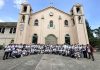
As NASAGA marks 60 years, Alminaza said the Church stands “between long-standing wounds and new possibilities,” reminding participants that “no wound is too old for resurrection.”
He summarized the Church’s approach to social action as “Listen. Discern. Respond,” saying this reflects both the way Jesus acts and how a synodal Church lives.
“Social action is not a parallel ministry,” he said. “It is how the Church listens with the poor, discerns with the Spirit, and responds together as one body.”
Alminaza stressed the need for sustained care beyond moments of transformation, recalling Jesus’ instruction after raising the child: “Give her something to eat.”
“Sustaining life means building systems that protect the vulnerable, accompany communities over time, and form leaders who choose service over power,” he said.
Sixty years of Church social action, he added, is “not only something to celebrate,” but “something to carry forward, with humility, courage, and renewed faith.”