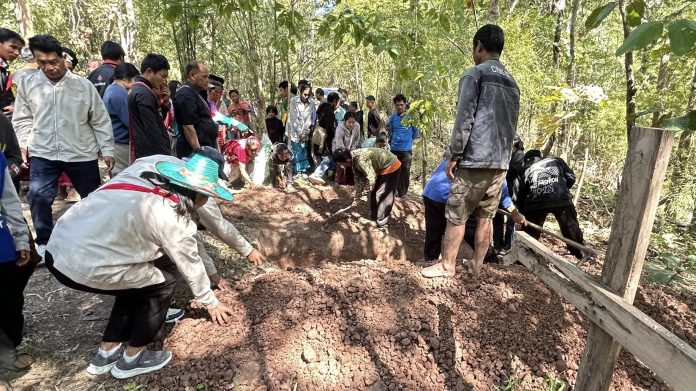
While the cardinals gathered in Rome last week for an extraordinary consistory, a remote mountain village on the Thai-Myanmar border was providing a masterclass in the very “synodality” the cardinals were convened to discuss.
As Pope Leo XIV and the College of Cardinals voted to prioritize “synod and synodality” as a central theme for the Church’s discernment, the lived reality of that mission was quietly unfolding in Khun Huai Mae Sot.
There, the “walking together” of the Church was not a theological concept but a communal rhythm of grief, grace, and mountain soil.
The liturgy of the neighbors
Fr. Pongsak Od-Od, parish priest of St. Theresa Parish in Mae Sot, 500 kilometers northwest of Bangkok, recently traveled to this Indigenous Karen Pga K’nyuaw village, a small community nestled in the embrace of the mountains, to preside over a funeral Mass.
What he found was a community that had been practicing “synodality” decades before the term entered the modern ecclesiastical lexicon.
“What impressed me most was not modern conveniences,” Fr. Pongsak said. “It was the way people’s hearts were so deeply intertwined. In the local language, they speak of ‘Ma Dor Ma Kar’—mutual assistance.
In truth, Ma Dor Ma Kar is synodality in its purest form. It is the art of walking together.”
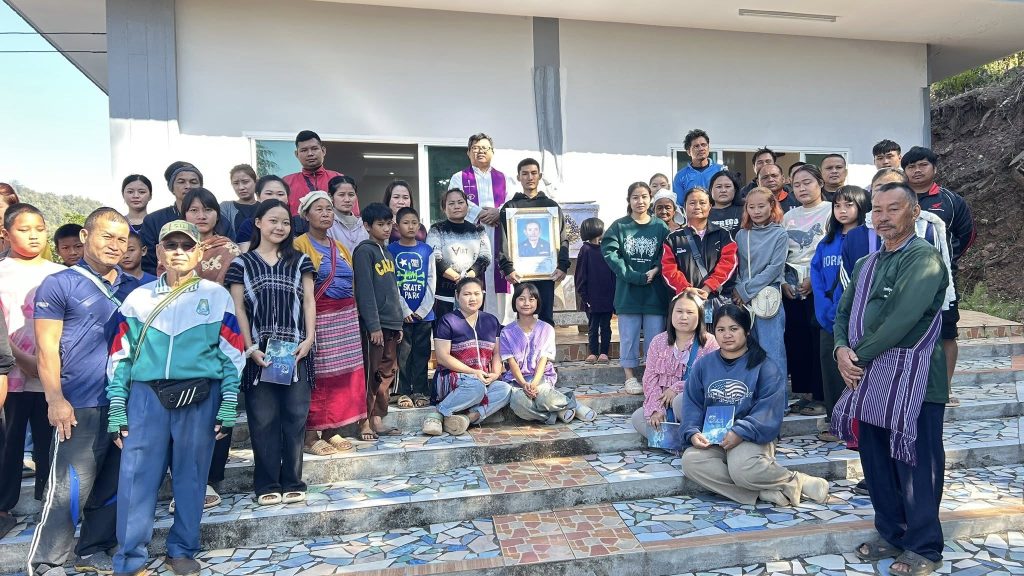
Community that moves as one body
The synodal path is often described as “listening and journeying.” In Khun Huai Mae Sot, this was made visible through the death of a community member.
The village did not wait for an invitation; they listened to the need.
“There was no hiring, no formal calling for help,” Fr. Pongsak recalled. “People simply came. They listened to the silence left by the deceased and filled it with their presence.”
In a striking display of “communion” over “division,” the village moved as a single body:
• The Shared Task: Catholics, Buddhists, and followers of traditional beliefs worked side by side, preparing meals and the funeral rites.
• The Shared Sorrow: The “walking together” became literal as the entire village formed a procession, accompanying the family and the deceased to the mission station and cemetery.
• The Shared Poverty: Despite their material lack, Fr. Pongsak noted an “overflowing resource of kindness” that no bank account could mirror.
Conversion of the pastor
For Fr. Pongsak, the trip was more than a ministerial duty; it was a moment of “pastoral conversion,” a key pillar of the synodal process. He realized that the Church’s call to listen applies to the clergy as much as the laity.
“It taught me that being a good priest means listening as well as praying,” he reflected. “True pastoral work is not found in textbooks. It is on the land, in wooden houses, and in the hearts of the people.”
He observed that spiritual leadership in a synodal Church is not about being “wiser” than the flock but about having the sensitivity to recognize the Holy Spirit already at work in the vulnerability of the people.
Echoes of Rome in the peripheries
During last week’s extraordinary consistory, Pope Leo XIV framed synodality as a path of shared responsibility essential for the Church in the third millennium. He urged the cardinals to envision a Church that is “not a fortress, but a family on a journey.”
In Khun Huai Mae Sot, this vision is already a lived reality. Through traditional governance and communal decision-making, the villagers offer an integrated vision of a Church where every member, regardless of status or wealth, is an active co-creator of the community.
As the Church continues its global reflection on synodality, the lesson from this border village is clear: to “walk together” requires first the humility to listen to the rhythm of the people’s lives.
In the dust of the mountain path, Fr. Pongsak found a Church that does not just talk about synodality but breathes it.