The legacy of Pope Francis is akin to the cherished offerings of lustrous gems that adorn the top of an altar of eucharistia (εὐχαριστία), ranging from Christus Vivit (CV), Evangelii Gaudium (EG), Laudato Si’ (LS), Laudate Deum (LD), Fratelli Tutti (FT), Querida Amazonia (QA), and Spes Non Confundit (SNC). These gems await deeper interiorization by believers across national, regional and continental communities, and eventually by the entire global society.
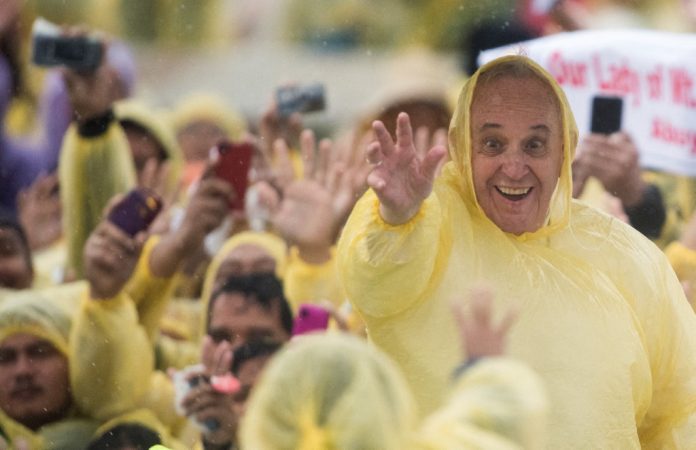
Through Christus Vivit, Pope Francis exercises an influential intergenerational leadership through the use of social media, even entertaining selfies, to the delight of the young. His leadership offers his first “gem” as pope: a reminder that youth are never “passive followers,” and adults need to learn from the youth the art of “walking alongside them, allowing them to be active participants in the journey” (CV §246). He also emphasizes that “youth ministry has to be synodal; it should involve a ‘journeying together’ which values ‘the charisms that the Spirit bestows’ on each student/youth as the baptized members of the Church whose contributions build up ‘a participatory and co-responsible Church, one capable of appreciating its own rich variety, gratefully accepting the contributions’ of each member of the ecclesial associations and movements. No one should be excluded or exclude themselves” (CV §206).
In journeying together, listening to students and youth becomes a way of listening to the Holy Spirit about what it means to “bring young people to take the lead in striving for a more just social order within their countries,” as they are the “agents of social change” (Papal Message, July 22, 2022), and how God desires them “to be ‘protagonists of the revolution of charity and service’” (CV §174; papal address at a private audience, Sept. 20, 2024, in Rome).
As a Jesuit schooled in the all-inclusive Jesuit/Ignatian spirituality of “God in all things; all things in God,” Pope Francis offers an eco-mystical second gem through Laudato Si’, stating that “we are all interconnected, interdependent” (LS §16, §70b, §73, §91, §111, §117, §138; QA §73). The cosmos is part of us, and we humans have to mature into cosmocentric beings, awakening day by day to the innate sense that we are “part of nature” (LS §139) and do “not look at the world from without but from within,” for we are “included in it and thus in constant interaction with it” (LD §25). As such, “human life, intelligence and freedom are elements of the nature that enriches our planet/cosmos, part of its internal workings and its equilibrium” (LD §26).
His vision offers an insight that all other kinds and humankind are invited to become co-creators with God. The eschatological orientation of his vision enables us to envisage a creation basking in the fullness of God because Pope Francis firmly believes that “creation is projected towards divinization” (LS §236) at the end time, when God is in all, through all, all in all (Eph. 4:6). This is best described as the “total eschatologization” of creation and the cosmos. In other words, co-creation is a collaborative process involving both God and all kinds by which God brings about a new earth and a new heaven (Is 65:17; 66:22; 2 P3:13; Rev 21:1), borne out of the actions and initiatives we engage in to promote harmonious living among all kinds to ensure a more sustainable and livable Earth. Emerging out of the new earth and a new heaven, God in turn brings about a new creation (2 Cor 5:17) now until the end time.
This collaborative vision calls for the third gem, which is ecological conversion, by which we “experience a conversion, a change of heart” (LS §218) in our personal and communal attitudes, dispositions and lifestyle as earth sojourners inhabiting this planet Earth, within our entire cosmos.
For me, conversion to the everyday practice of “oneing” (Meister Eckhart, c. 1260–c. 1328) is crucial for all earth sojourners (ES) to deepen the sense of integral ecology in which everything is interconnected and interdependent. This amounts to a deep sense of oneness of all kinds and things that enables ES to navigate personal challenges and struggles, including the polycrisis and climate emergency at the macro level.
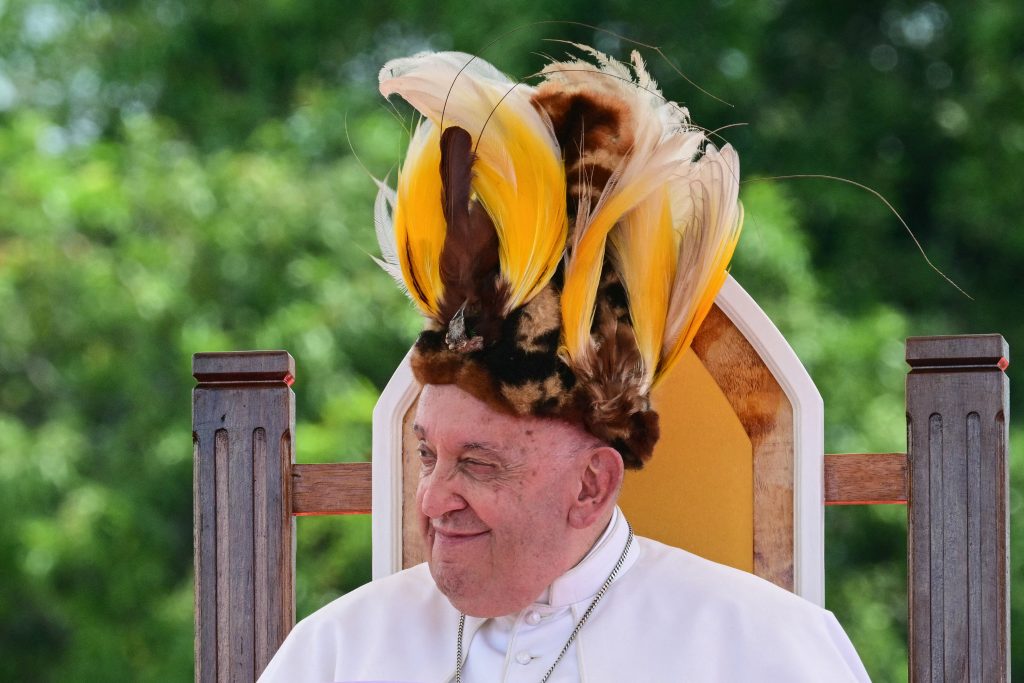
Since July 19, 2025, oneing involving the ancestors has been a daily practice:
“I am one with the Triune God, the Risen Lord, Rûah Elohim, St. Ignatius of Loyola, all the angels of all faith traditions, St. Kateri Tekakwitha, Blessed Black Elk, with all the ancestors of all traditions, particularly Sac’hem Chikatabut, Chief Seattle, Sitting Bull and Red Cloud. You are the eschatological community of the new creation. You love all creation, the heaven and the earth, into a new creation, a new heaven and a new earth. You love nature into being. All of you love the birds and the trees outside my window into being today as you love me into being. You pray for-with all the IDPs at the Cambodia-Thai border into beings who experience care, security and that they will live in freedom and peace soon. All of you, please pray for-with my niece so that she enjoys the fullness of health and be able to resume her studies soon.”
Oneing deepened an experiential sense of interconnected interdependence that enables each earth sojourner to enter into a felt sense of “being with,” or communion with, the Creator-Sustainer God, the Risen Lord, God’s Rûah, with all the saints like Pope Paul VI and Georgio Frasetti, the blessed, the ancestors like Pope Francis, and all the reputable shamans, mystics, prophets, healers, herbalists, midwives, chiefs and elders of all faith traditions (primal and world religions, religious congregations) who constitute the eschatological community of New Creation (ECNC). This eschatological communion deepens each ES’s experience of how the ECNC loves all kinds, with their inherent values in themselves, into their existence daily because “God has loved you with an everlasting love” (Jer 31:3). God loves not just the heaven and the Earth into new heaven and new Earth, but each life form (bacteria, microbes and viruses), each creature (chicken, deer, dog, rabbit), each created thing (blanket, mattress, pillow, laptop, table, pencils and pens), independent of their use to humans, and each human, anew in their respective existence too. Therefore, conversion through this oneing with the Earth and nature deepens the sense of an Earth and nature that are spirit-filled because of the indwelling of God’s Rûah in all kinds, making them sacred and calling us humans to respect the inherent value (LS §69; QA §54) in them. ECNC prays with and for creation, Earth and all kinds to be reconciled, sacralized, sensitized and sustained daily. With this deepening sense of ECNC communion with the cosmos, the heavenly planetary bodies, the Earth and all life forms, creatures and humans, there is a felt sense in our bodies that all are truly one with the cosmos, Earth and all kinds.
Conversion to oneing is also a call to lifestyle changes. This oneing calls for a renewed commitment in each ES to bring about a nuclear- and plastic-free world. Each ES is led by God’s Spirit to experience an inner peace and deepen this peace in the heart in order to bring about peace in homes, campuses and neighborhoods. In the little gestures of promoting peace between peoples, nations and continents, we build up a nuclear-free world, especially when we remember the survivors of the 80th anniversary of the Hiroshima and Nagasaki atomic bombings. Each ES needs to take a daily stand against the use of plastic. Let us join in the little efforts to bring about a plastic-free world as the U.N. INC (Intergovernmental Negotiating Committee) conference convenes in Geneva from Aug. 5-14, 2025. This INC conference aims to arrive at a global treaty to tackle the crisis of plastic pollution and its impact on climate change, human health, marine life and the economy.
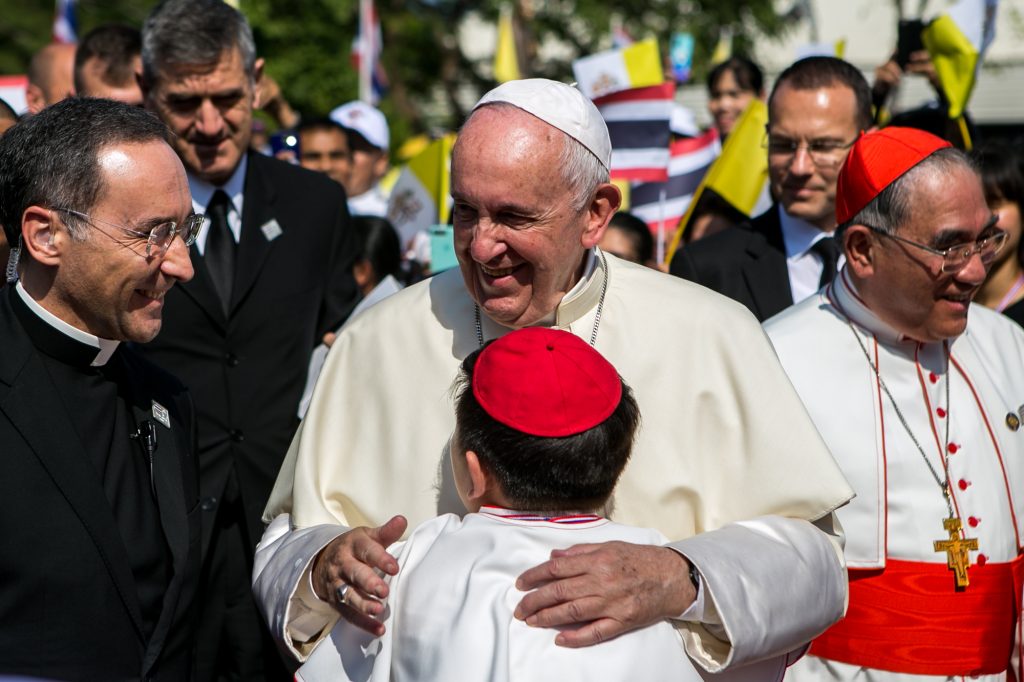
Oneing cascades into solidarity with the vulnerable at the margins of society. Fraternal solidarity is the fourth gem of Pope Francis, who urges us to behave like the Good Samaritan who embraces “the bruised and abandoned person on the roadside” and does not ignore the wounded as “a distraction, an interruption from all that,” or as someone “hardly important, a ‘nobody,’ undistinguished, irrelevant to their plans for the future” (FT §101). His message of solidarity, in which “the more fortunate should renounce some of their rights so as to place their goods more generously at the service of others” (QA §33), becomes all the more urgent in a global society where power, resources, wealth and benefits are unevenly distributed. This spirit of solidarity begins when we practice oneing with fellow ES who are very different, even ideologically opposed. Oneing enables each ES to enter into fraternal solidarity with the survivor-victims of conflict and climate disasters and those at the margins of society.
Pope Francis’ fifth gem is about the polyhedron, which he first mentioned in Evangelii Gaudium (§236; FT §§145, 190, 215; QA §§29-32). In Fratelli Tutti (§8), the polyhedron is described with images of a family:
“Let us dream, then, as a single human family, as fellow travelers sharing the same flesh, as children of the same earth which is our common home, each of us bringing the richness of his or her beliefs and convictions, each of us with his or her own voice, brothers and sisters all.”
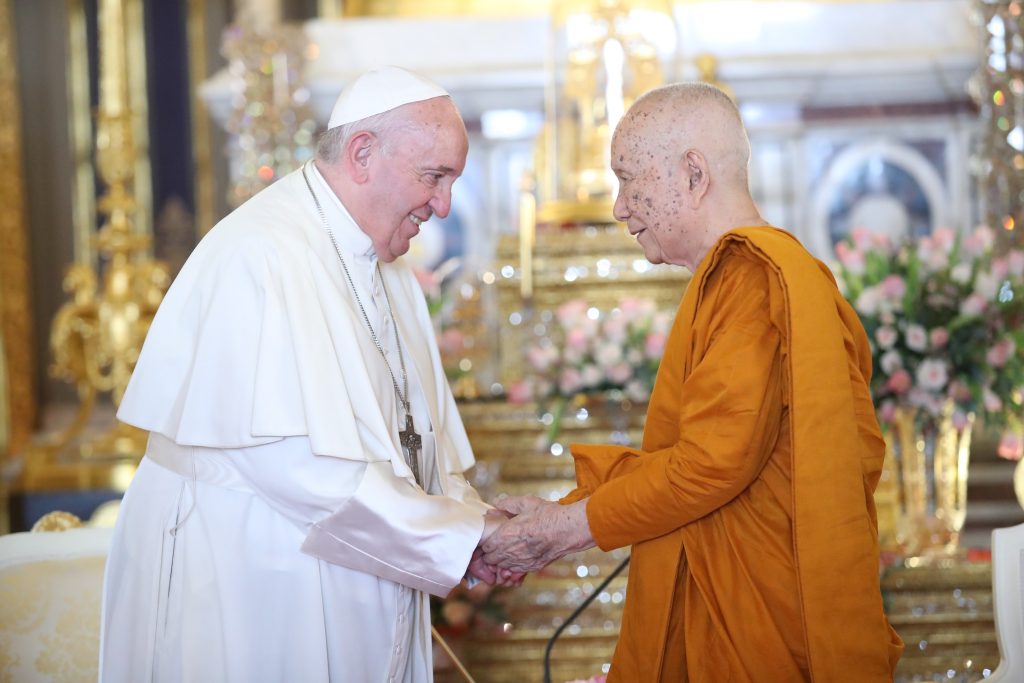
This metaphor has inspired the 2025 articulation of a Polyhedral Christianity of Sacred Sustainability (PCSS) out of two decades of learning from Indigenous communities their sense of sacredness and sustainability. PCSS describes a global Christianity with the capacity to embrace, dialogue and listen to the intercultural and multireligious complexities of our contemporary world to discern what and where God’s Rûah is leading us into a single family of all kinds. PCSS calls for an enspirited leadership grounded in the deepening religious experiences of God’s cosmic indwelling Rûah as explained in creational pneumatology. This all-pervasive presence of Rûah Elohim makes the cosmos, Earth and all kinds spirited and sacred, borne of the relation of the Indigenous and interfaith sense of sacredness and sustainability, which contribute to the religious sense of sacred sustainability. This sacred worldview-feel is at the heart of a Rûah-sustained cosmic spirituality called cosmicism. Enspirited leaders (ELs) of PCSS are Rûah-inspired to promote resilience in the religiocultural communities that enjoy a more relational harmony of all kinds on Earth. This cosmic harmony or balance is rooted in an “interdependent, interconnected oneness” in the sacred web of life in the cosmos and creation.
Hope is the sixth gem of Pope Francis. Hope is necessary for our resilience in the face of personal challenges, struggles and polycrisis. Each ES has to experience that the “Holy Spirit illumines all believers with the light of hope … keeps that light burning, like an ever-burning lamp, to sustain and invigorate our lives” (SNC §2). In his Sept. 1, 2024, World Day of Peace message, Pope Francis urges all to hope and act with creation by joining forces and walking “together with all men and women of good will” (§6) as we live the “incarnational faith” that “enters into the suffering and hope-filled ‘flesh’ of others so that our lives become ‘a song of love for God, for humanity, with and for creation and find their fullness in holiness’” (§9).
Ultimately, these six lustrous gems need to adorn the altar of eucharistia in the innermost sanctuary of the heart and being of every student and youth. From such inner altars, may the divine glory of God radiate from within communities, the Earth and creation, for all kinds eventually become one with all in God, and God is one with all in creation.
Fr. Jojo M. Fung is an associate professor at the Loyola School of Theology. He is the Cavalieri Professor for fall 2025 at the Clough School of Theology & Ministry, Boston College. He is the international chaplain of the International Movement of Catholic Students (IMCS) Pax Romana. He was the coordinator of JCIM for 20 years.