For this writer, the real heroes in the Philippines are the exploited and abused boys and girls who have endured horrific beatings and rapes by child sex abusers and found the courage to fight back and attain justice for themselves. Cases of child abuse, especially online child sexual abuse, are rising, according to data from the National Baseline Study on Violence Against Children in the Philippines. Eight out of 10 children — or 80 percent — face some form of violence or abuse during their lifetime.
Children ages 0 to 17 make up roughly 33.6 percent of the country’s population. In a total estimated population of more than 112 million, this translates to approximately 38 million to 40 million children living in the Philippines. The United Nations Children’s Fund (Unicef) estimates that 17 percent of them experienced sexual abuse by parents, relatives and pedophiles. As many as 2 million Filipino children ages 12 to 17 were subjected to online sexual abuse and exploitation in 2020 and 2021, and it is likely that this has increased since then. One in five internet-using children, or 20 percent, suffers abuse. Such numbers are shocking in a predominantly Catholic country where every child should be loved and protected. Sadly, this is not the case.
Childcare by nongovernmental organizations (NGOs), such as our Olongapo City-based Preda Foundation, protects and heals abused children and helps them win justice against their abusers. Local social workers refer young abuse survivors to Preda’s therapeutic center every week. Several hundred abused children have received help and protection there, been healed and empowered, stood up for their rights and dignity, and testified against their abusers while under Preda’s care and protection. They are later reintegrated with responsible family members and receive aftercare services. As many as 20 convictions are won every year. As of Oct. 10, children helped by Preda have won 18 convictions. More are expected, thanks to dedicated family court judges and equally dedicated prosecutors.
The Preda Foundation is known for healing abuse survivors and helping them attain victory in court. Its social workers are advised by the Standards Bureau of the Department of Social Welfare and Development, which is greatly improving care for abused children in residential centers by providing training and strict monitoring.
Child sexual abuse is spreading because of the internet. Images of children being abused are easily available online, and the government is helpless to control their transmission. It is an independent power unto itself. Any act by an adult of a sexual nature against a child 16 or younger is statutory abuse, and the accused receives a long prison sentence if convicted. Some victims are as young as 3, and many have suffered sexual exploitation and abuse.
Trafficked by own aunt
Abusers can be anyone: family members, pedophiles or strangers. But more children are fighting back, getting help and winning convictions against their abusers. One of them is Jenny. In 2022, then-15-year-old Jenny was trafficked by Daday, an aunt, and sold to a foreigner inside the Subic Bay Freeport Zone. When her parents learned about it, they filed a complaint. The police then referred Jenny to a local social worker, who referred her to the Preda home for girls.
There, Jenny gained new friends and settled quite well after a few weeks. In one emotional release therapy session, she revealed a long-kept secret: she had been raped by Jayson, Daday’s brother, since she was 8. She was unable to tell anyone about it because Jayson threatened to kill her parents if she did.
After a few months, she also filed a legal complaint against Jayson. She told her story in court, and the judges hearing the complaints believed her. Daday was convicted of trafficking in 2025, while Jayson was convicted this month of statutory rape and sentenced to life in prison.
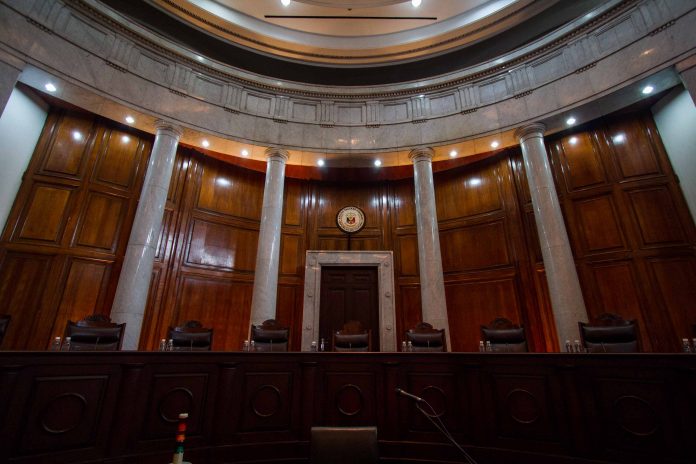
Children are mostly believed by judges when they clearly testify about the abuse they endured, even if there were no witnesses. Many child rapists are sentenced to life in prison. Even a Catholic priest was finally found guilty and sentenced to life in prison on Dec. 17, 2025, by Judge Modesto Bahul Jr. of the Baguio City Regional Trial Court.
He is just one of the possible 453 child-abusing priests in the Philippines, out of 10,633 priests in total. Another priest is already behind bars, and two others are on trial. Most suspected abusers are protected by some of their bishops so they do not have to confess their sins and do penance in jail. They have impunity and can continue to abuse children.
There is no millstone around their necks and no throwing them into the deep sea, as Jesus of Nazareth said should happen, in the Gospel of Saint Matthew (18:6–7). Bishops can ignore the Gospels, it seems.
But it is understandable that priests are protected because Philippine prisons are notorious for their subhuman standards and for their culture of gang rape and constant sexual abuse. A report by Just Detention International submitted to the UN said prisoners, among others, are raped, “left beaten and bloodied, contract HIV and other sexually transmitted diseases, and suffer severe psychological harm.”
However, convicted priests would have special privileges and protection even inside prison; other convicted child rapists would not.
Children older than 15 who are detained in government-run Bahay Pag-asa facilities have no such privileges, although the law says they should have. A Commission on Human Rights (CHR) report to the UN says these children suffer physical, sexual and psychological abuse. Despite the existence of Republic Act 9344, or the Juvenile Justice and Welfare Act of 2006, which aims to protect children from abuse, sexual and physical abuse continues in youth detention centers. The media and NGOs are barred from visiting these facilities after several exposés of their harsh and abusive conditions.
The CHR said in its report that youth detention centers in the Philippines are more like subhuman jails. “Instead of serving as safe spaces for restorative justice, many Bahay Pag-asa centers are functionally designed like adult prisons, complete with restrictive bars, padlock control, and stark, non-conducive rehabilitation spaces,” the commission said.
“The children suffer poor nutrition, cramped cells [and] dirty toilets. Education is severely restricted or nonexistent; mental or physical health care services are nonexistent,” it added.
Some compassionate judges in Cebu refer and transfer some youths in conflict with the law from the Cebu City Operation Second Chance to the Preda Foundation’s New Dawn Home in Liloan. There, a community of 25 boys live in harmony and freely choose to stay. None have escaped, and they continue their training and education — and slowly change their lives.