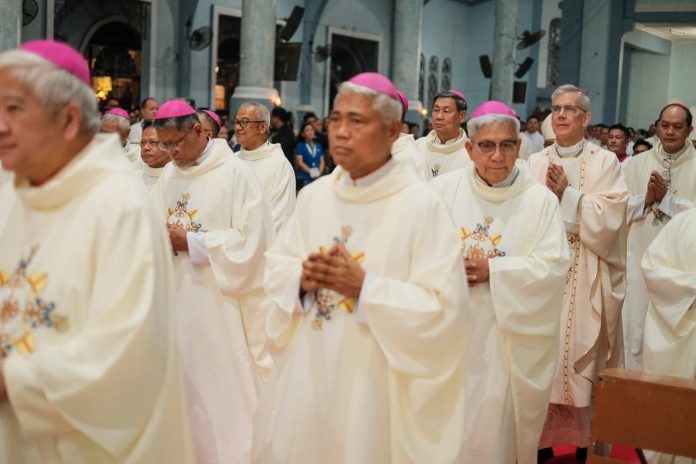
Philippine bishops on Monday told Catholics that mental illness is neither a sign of weak faith nor a punishment from God and urged Church communities to reject stigma, encourage professional care, and accompany those who struggle with psychological suffering.
The Catholic Bishops’ Conference of the Philippines (CBCP) made the appeal in a pastoral letter released following its 132nd Plenary Assembly.
The document offers one of the bishops’ clearest statements on mental health, calling for a more compassionate pastoral response while affirming that faith and professional treatment go hand in hand.
“Mental illness is not a sign of weak faith. It is not a punishment from God,” the bishops said. “Like any illness, it deserves understanding, appropriate care, and compassionate accompaniment,” they added.
The bishops urged Catholics not to view psychological treatment as incompatible with faith.
“Seeking medical or psychological help is not a lack of faith,” they said, adding that God’s healing “often comes through the dedicated service of doctors, psychologists, counselors, and other caregivers, whose work we gratefully acknowledge.”
The pastoral letter describes mental health as “a reality we cannot ignore,” pointing to poverty, unemployment, injustice, family conflict, migration, natural disasters, online gambling, and other forms of addiction as conditions that can intensify emotional and psychological distress.
The bishops also cautioned that digital technology and artificial intelligence, while offering new opportunities for learning, communication, creativity, and service, can also contribute to anxiety, loneliness, unhealthy comparison, cyberbullying, and addiction when left unchecked.
They called on parishes, Basic Ecclesial Communities, Catholic schools, families, and Church institutions to become places where those experiencing mental health challenges can seek help without fear of rejection.
“Our parishes should become sanctuaries of listening and accompaniment, where those carrying invisible burdens know they are not alone,” the bishops said.
The pastoral letter also addresses families grieving the loss of loved ones through suicide, acknowledging that some have encountered misunderstanding within the Church.
“We wish to speak especially to families grieving the death of a loved one through suicide,” the bishops said.
“If you have experienced misunderstanding or felt unwelcome within the Church during your time of grief, we ask your forgiveness.”
The bishops called on priests and pastoral workers “to accompany families with compassion, to celebrate the Church’s funeral rites in accordance with current ecclesiastical discipline, and to proclaim the hope that is found in Christ.”
Quoting the Catechism of the Catholic Church, they said the Church “entrusts your loved ones to the infinite mercy of God,” adding: “As the grave psychological suffering can diminish personal responsibility, we should not despair of the eternal salvation of persons who have taken their own lives.”
The section concludes with a brief appeal to grieving families: “Please do not lose hope.”
The bishops said the Church’s response must extend beyond awareness to sustained pastoral action, committing to foster communities where people living with mental illness are welcomed rather than judged.
“As a Church, we commit to building communities of encounter, breaking the stigma, strengthening collaboration, and walking together in hope so that every person is welcomed, accompanied, and freed from stigma.”