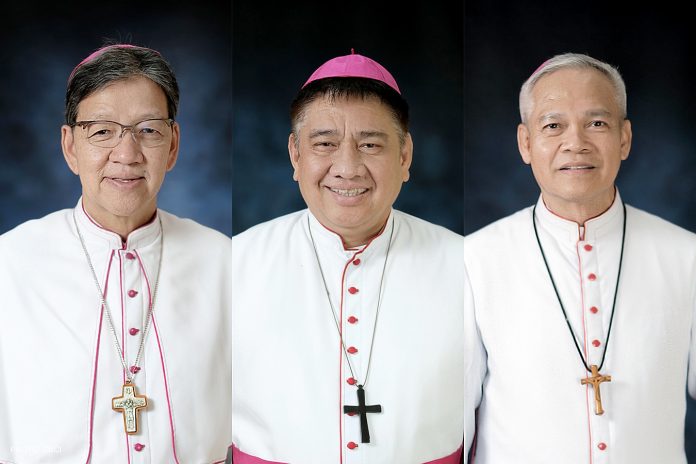
Three Filipino archbishops will receive the pallium from Pope Leo XIV, a woolen vestment symbolizing their authority as metropolitan archbishops and their communion with the pontiff.
Pope Leo will preside over a Mass in St. Peter’s Basilica on June 29, the Solemnity of Saints Peter and Paul, during which he will bless and impose the pallia on newly appointed metropolitan archbishops from around the world.
The Filipinos are Archbishop Alberto Uy of Cebu, Archbishop Charlie Inzon of Cotabato, and Archbishop David William Antonio of Nueva Segovia.
Uy, 59, was appointed archbishop of Cebu on July 16, 2025, and installed on Sept. 30. Inzon, 60, was appointed archbishop of Cotabato on Sept. 8, 2025, and installed on Dec. 8. Antonio, 62, was appointed archbishop of Nueva Segovia on Nov. 4, 2025, and installed on Jan. 14, 2026.
Ahead of the ceremony, Uy asked the faithful to pray “for me and for my fellow archbishops, that the Lord may grant us safe travel and help us to be faithful shepherds of His people.”
The pallium, made from white wool, is worn over the shoulders by metropolitan archbishops during liturgical celebrations within their ecclesiastical provinces. It signifies their pastoral responsibility, their unity with the pope, and their role as shepherds of the flock entrusted to them.
The vestment is marked with six black silk crosses and secured with three pins, traditionally recalling the nails used in Christ’s crucifixion.
The wool used to make the pallia comes from lambs traditionally blessed each year on the feast of St. Agnes. The pallia are then kept overnight near the tomb of St. Peter before being blessed by the pope during the June 29 liturgy.
Each year, newly appointed metropolitan archbishops travel to the Vatican to receive the pallium, one of the most significant symbols of their office.