
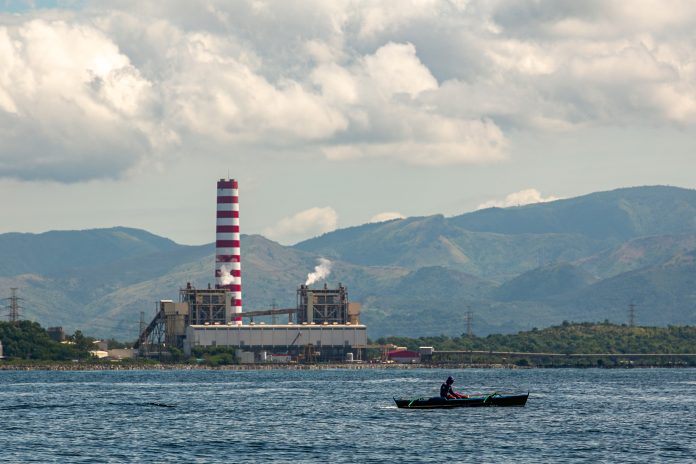
The Philippine government plans to increase output from coal-fired power plants to temper rising electricity costs as the Middle East conflict disrupts global gas supply, a move that has renewed scrutiny over the country’s reliance on fossil fuels.
Energy Secretary Sharon Garin said authorities have asked coal plant operators to boost generation as prices of liquefied natural gas (LNG) continue to surge.
The measure, which could begin as early as April 1, is intended to cushion consumers from higher power rates, according to Agence France-Presse report.
“We talked to the generation companies, the coal-powered plants, to check how much they can increase their generation,” Garin said, describing the plan as a “temporary measure.”
“If we are successful in implementing this, at least we can decrease the electricity rate hikes because of the conflict in the Middle East,” she added.
The Philippines relies on coal for about 60 percent of its electricity and remains dependent on imported fuel, leaving it vulnerable to global price shocks.
Garin said the government is also prepared to increase coal imports if needed, noting that “there’s no restriction on our importation of coal from Indonesia as of today.”
The policy shift follows escalating tensions in the Middle East, which have disrupted energy flows and pushed up fuel prices, particularly for countries dependent on imports.
Consumer advocates said the situation reflects deeper structural problems in the country’s energy policy.
Gerry Arances, convenor of the Power for People Coalition, said “costs of fossil fuels are highly susceptible to global market volatilities – especially a geopolitical crisis of this scale,” warning that reliance on these sources drives electricity costs higher.
He urged the government to shield households from further increases, saying “the DOE and the administration must ensure that Filipino households are cushioned from the devastating blow of the war on energy rates,” and called for urgent measures, including price controls and a review of charges passed on to consumers.
Arances said the crisis should prompt a shift in policy, adding that “our government really needs to prioritize the large-scale deployment of distributed renewables,” which he described as both “strategic in the long term and immediate solutions” that can be deployed quickly.
Church leaders also raised concern over the broader implications of the energy crisis. Caritas Philippines said the situation “exposes a deeper structural injustice: a global economic system heavily dependent on fossil fuels,” linking volatility in energy prices to ongoing conflict.
“For Filipino families, higher oil prices mean rising transport fares, increasing food costs, higher electricity bills, and greater economic insecurity,” the group said, warning that “when oil becomes entangled with war, it is always the poor who suffer first and longest.”
Caritas Philippines called for a transition to renewable energy, stressing that “renewable energy is no longer simply a climate solution” but “a peace strategy, an anti-poverty measure, and a shield against geopolitical shocks.”
The government maintains the shift to coal is temporary, but the move has renewed debate over the country’s long-term energy direction.