Explosions from aerial bombardments in Myanmar jolted residents of Thailand’s border town of Mae Sot on Ash Wednesday, disrupting the start of Lent and underscoring the fragile state of peace along the frontier.
Fr. Pongsak Od-Od, a priest serving in Mae Sot in Tak province, about 500 kilometers northwest of Bangkok, said blasts from aerial attacks on the Myanmar side reverberated into Thai territory early in the morning, startling residents as Christians began their Lenten observances.
“For a moment, some people thought it was the sound of firecrackers from festive celebrations,” he said. “But it was not a celebration. It was war.”
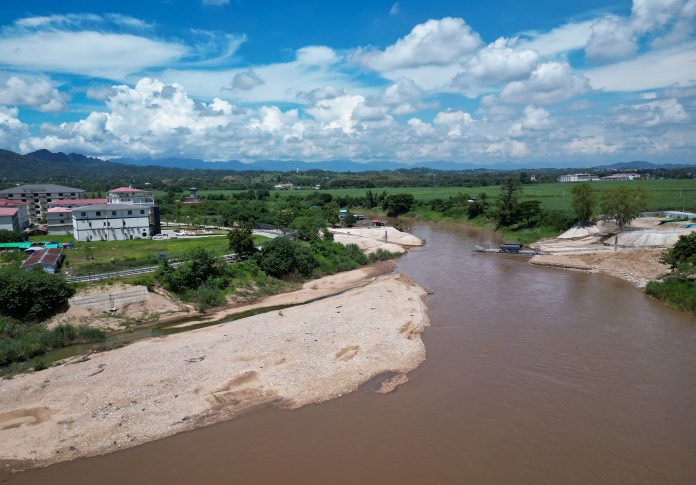
Mae Sot lies opposite Myawaddy in eastern Myanmar, a region that has experienced intense fighting since the military coup of February 2021.
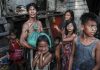
Renewed clashes in recent weeks have forced civilians to flee their homes, with some seeking safety along the Thai border and others hiding in nearby forests.
The timing of the explosions on Ash Wednesday, the first day of Lent in the Christian calendar, struck Fr. Pongsak as deeply symbolic.
“In Lent, we are called to conversion of heart,” he reflected. “Today’s events remind us that peace is not something obtained by chance. It is something we must pray for and cherish.”
A Thin Line Between Joy and Fear
The confusion over the morning blasts, briefly mistaken for celebratory fireworks, carried what the priest described as a painful lesson about how thin the line can be between joy and suffering.
“On one side of the border, people may celebrate,” he said. “On the other side, families are fleeing for their lives.”
For Fr. Pongsak, the violence unfolding near Mae Sot underscores a broader spiritual reality.
Wars, whether in Myanmar or elsewhere, are often rooted in the pursuit of power and self-interest, he said. When ego outweighs compassion, human beings risk seeing others not as persons with dignity, but as obstacles or targets.
Lent, he added, calls Christians to metanoia, a Greek term meaning a change of heart and mind, moving from self-centeredness to recognition of the sacredness of every human life.
Beyond Fasting to Restoration
While many Catholics observe Lent through fasting and prayer, the priest said the border situation challenges believers to deepen their understanding of sacrifice.
“The most important fasting today may be fasting from violence, from hatred, from indifference,” he said. “And the most important restoration is restoring brotherhood.”
The tremors felt in Mae Sot, he suggested, should awaken consciences far beyond the border region and invite solidarity with those forced to flee conflict and insecurity.
Catholic agencies have been responding to that call.
Caritas Thailand, together with the Catholic Office for Emergency Relief and Refugees, the Jesuit Mission, and local dioceses including the Diocese of Nakhon Sawan and the Diocese of Chiang Mai, have been providing humanitarian and pastoral support to displaced communities along the border.
Their work spans nine refugee camps, with special attention to unaccompanied minors and children separated from their families. Assistance includes food, clean water, medicine, shelter materials, and educational and psychosocial support.
Many refugees continue to live in makeshift shelters or forest hideouts where access to basic services remains limited.
Fr. Pongsak’s ministry focuses on pastoral visits, celebrating the sacraments, and offering spiritual accompaniment to Catholic refugees coping with trauma and uncertainty.
“Peace begins with ears and ends with hands,” he said. “We must first listen to the suffering. Then we must respond.”
He urged Christians not to turn away from the crisis simply because it unfolds across a national border.
“In God’s eyes, no border can limit His love,” he said. “If we close our ears and say, ‘It is not our concern,’ peace will never come.”
As Lent begins, the explosions heard in Mae Sot stand as a sobering backdrop to prayer and ashes, a call to conversion not only of individuals, but of societies wounded by conflict.