The CIVICUS Monitor reported on Tuesday that civic space across the Asia-Pacific continues to be severely restricted, with the detention of protesters and activists emerging as the region’s most widespread violation in 2025.
In its annual assessment, People Power Under Attack 2025, CIVICUS evaluated civic space conditions in 198 countries and territories, focusing on the freedoms of assembly, association, and expression.
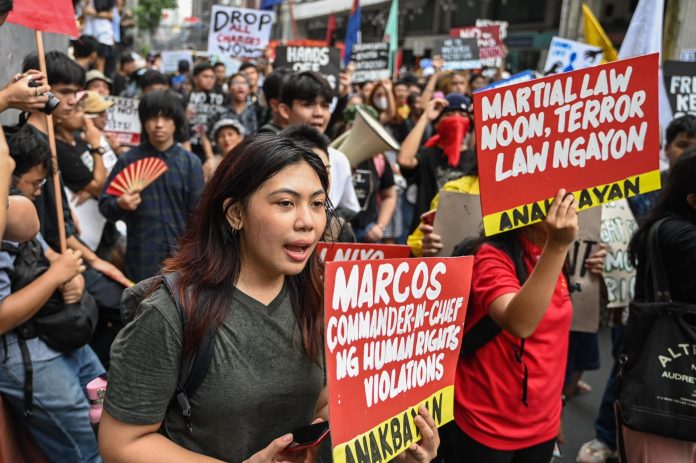
The Philippines remained in the repressed category, with documented cases of arbitrary arrests, harassment, and disappearances of activists throughout the year.
According to the report, rights advocates in the Philippines faced enforced disappearances, baseless criminal charges, and intensified harassment in 2025.
In February, activist Lejun dela Cruz went missing and was later found in the custody of the Pasig Police on murder accusations that were eventually dismissed.
In April, six activists in Cagayan Valley were charged with financing terrorism, while in May, ten Indigenous defenders and human rights advocates from Southern Palawan, known as the “Mariahangin 10”, were arrested and charged.
Criminalization also extended to the transport sector. Felix Consad, a PISTON member, was arrested in August on what the report described as trumped-up murder charges.
In October, soldiers allegedly harassed delegates of an international solidarity mission on climate justice in communities in Rizal, Mindoro, Negros Occidental, and Leyte.
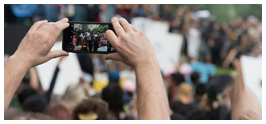
The monitor recorded a violent response to mass protests. In September, tens of thousands of Filipinos marched against government corruption.
According to the group, police used unnecessary and excessive force, arresting more than 200 people, including 91 children. Water cannon and tear gas were deployed, and some detainees were denied access to lawyers and their families.
Journalists also remained at risk. Radio broadcaster Erwin Labitad Segovia was shot in July, while in October, reporter Noel Bellen Samar was shot while traveling along the Maharlika Highway in Albay.
The report also flagged censorship concerns after a documentary on harassment of Filipino fishermen in the West Philippine Sea was withdrawn from a film festival in March.
Asia-Pacific civic space ratings
The monitor found that more than 85 percent of the region’s population lives in countries rated repressed or closed.
Seven are listed as closed: Afghanistan, China, Hong Kong, Laos, Vietnam, Myanmar and North Korea. Nine are rated repressed and six obstructed. Only Japan and Taiwan are classified as open.
In the Pacific, the civic space environment is relatively more positive, with seven countries rated open and five narrowed, while Papua New Guinea and Nauru remain obstructed.
Mass detentions and worsening criminalization
CIVICUS said mass detentions of protesters were the most alarming regional trend. Security forces arrested protesters in at least 18 countries during demonstrations calling for democratic reforms, climate justice, and solidarity with Palestine.
“Governments are criminalising dissent on a massive scale. Peaceful protest is being painted as a crime, and those who dare to speak out and mobilise are paying with their freedom,” said Josef Benedict, the CIVICUS Monitor’s Asia-Pacific researcher.
Human rights defenders in at least 15 countries faced criminalization through defamation, anti-terrorism, and national security laws.
Reports of torture, ill-treatment, and deaths in custody surfaced in Myanmar and Afghanistan, while transnational repression intensified, particularly by authorities in Hong Kong and Cambodia.
Censorship and digital repression
Governments in at least 14 countries imposed censorship measures, including blocking news portals, banning publications, and imposing internet shutdowns. China continued to operate one of the world’s most extensive censorship systems.
Pakistan and India blocked thousands of social media accounts and YouTube channels. Singapore and Malaysia used broad online-content laws to curb dissent, while Vietnam and Indonesia imposed media restrictions.
“Censorship is being weaponised to keep citizens in the dark. From blocking news sites and social media channels to banning books, governments are rewriting reality to suit their narrative, and anyone who challenges that risks arrest,” Benedict said.
Countries of concern
The report identified Indonesia and Pakistan as countries of particular concern.
In Indonesia, where civic space is rated obstructed, mass protests in March and August were met with violent crackdowns that left thousands detained, including children, and reports of intimidation in custody.
Human rights defenders faced surveillance, harassment, and criminalization, while media outlets covering demonstrations received threats.
In Pakistan, rated repressed, authorities intensified crackdowns on activists, journalists, and opposition groups. Baloch defenders faced arbitrary arrests and terrorism charges, while the Pashtun Tahaffuz Movement was banned.
Internet shutdowns and blocked platforms underscored worsening digital repression, alongside prosecutions under cybercrime laws and the criminalization of political protests.