The Philippines has emerged as the 24th most charitable country globally, with three out of four Filipinos donating money in 2024, according to the newly released World Giving Report (WGR) 2025.
The report, launched by the Association of Foundations (AF) and the Charities Aid Foundation (CAF) on July 31, showed that 75 percent of Filipinos gave financial assistance last year — higher than the global average of 64 percent and Asia’s 69 percent.
“The WGR aims to tell both sides of the donors and charities. The more we understand, the more we can change,” said Alex Plumb, Head of Research at the Charities Aid Foundation.
The WGR replaces the previous World Giving Index (WGI), which ranked countries based on whether people helped a stranger, donated money, or volunteered their time. The new report offers a broader view of generosity, examining both donor behavior and the role of charities.
Filipinos ‘give more, even with less’
The report revealed that Filipinos donated an average of 1.46 percent of their income in 2024, compared to the global average of 1.04 percent and Asia’s 1.28 percent.
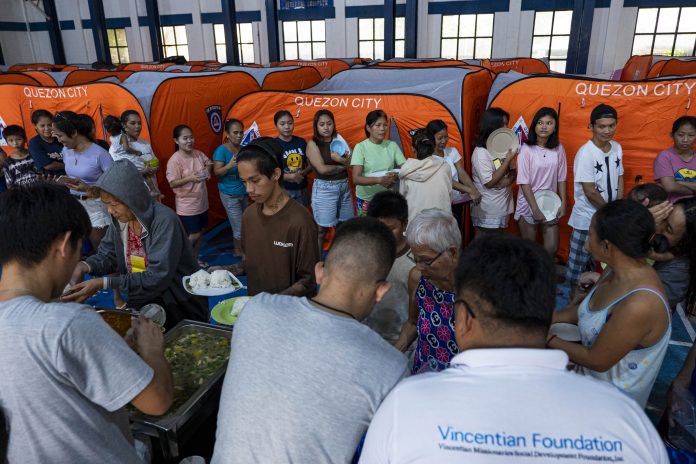
Most Filipinos preferred giving directly to individuals or families in need, followed by donations to religious organizations, while giving to charities ranked lowest.
“Filipinos feel compelled to help individuals and families during times of crisis. In addition, this route of giving also shows up in everyday life when we hand coins to a child on the street, or send money to someone who’s gone viral for needing help. Meanwhile, religious giving is unsurprising for a religious country like the Philippines,” said Milet Aquino, Communications Officer of the Association of Foundations.
The report also noted that low-income countries tend to give more than high-income nations.
“Giving doesn’t necessarily correlate with wealth or even security, but rather, maybe the perception of necessity. A really dynamic culture of giving can often be found in countries in need,” Plumb said.
Volunteering lags behind
Despite strong financial giving, volunteerism remains limited. Only one in four Filipinos volunteered in 2024, similar to global and Asian rates.
“Volunteer opportunities are often concentrated in urban areas, and some people may not know where or how to get involved. For some Filipinos, it may be a matter of time or energy,” Aquino said.
Cultural values drive trust in charities
The study also found that Filipinos have higher trust in charities than the global and Asian averages, a result Aquino attributed to long-standing cultural values.
“This likely stems from our values: bayanihan, kapwa, and malasakit. (communal unity, shared identity, and compassion) To many, charities are organized manifestations of these values,” she said.
Plumb added that social norms shape generosity across cultures, while Aquino urged Filipinos to strengthen their culture of giving.
“Bayanihan, kapwa, and malasakit are very much alive in different forms. The question now is, how can we harness that generosity?” she said.
The Association of Foundations said the findings highlight the importance of tapping into these values to drive organized giving and social development.